
.jpg)
BLOG
-
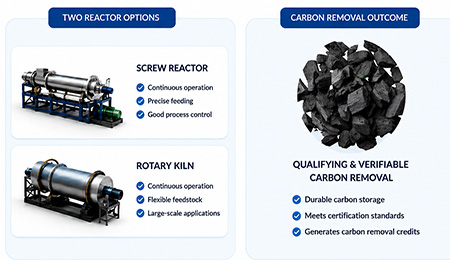 Rotary Kiln vs. Screw-Type Biochar Pyrolysis Equipment: Which Is Right for Your Project?Biochar pyrolysis equipment comes in various reactor configurations, but screw-type reactors and rotary kilns are the two most common choices for continuous biomass pyrolysis.2026-10-09
 -
 HaiQi Attends the 2026 China Carbon Market ConferenceOn September 15, 2026, HaiQi Group was invited to attend the 2026 China Carbon Market Conference in Wuhan. HaiQi's CEO, Steven Su attended the conference, joining representatives from government, international organizations, financial institutions, carbon market participants, and climate-related industries.2026-09-23
 -
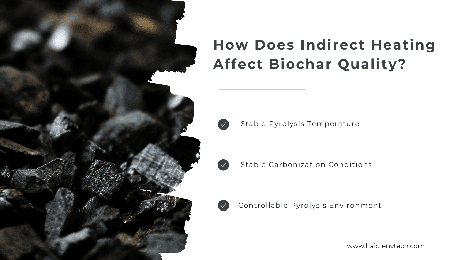 What is the Difference Between Direct and Indirect Heating in Biochar Production?Heating is central to biochar pyrolysis systems. Biomass must be heated to the required pyrolysis temperature within a controlled, oxygen-limited environment to convert organic matter into biochar and combustible gases, rather than simply burning the feedstock.
Consequently, the method used to heat the biomass is a critical aspect of equipment design for commercial biochar production.2026-09-22 -
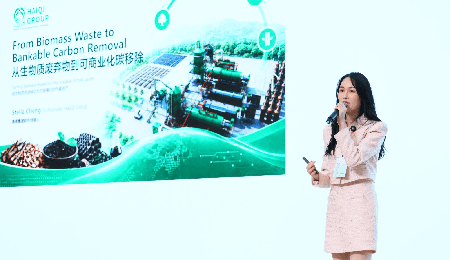 HaiQi Joins the 2026 HKGFA|GBA-GFA Annual Forum in Hong KongOn September 7, 2026, HaiQi joined the 2026 HKGFA|GBA-GFA Annual Forum in Hong Kong and participated in the launch of the Green Accelerator Project Showcase.2026-09-10
 -
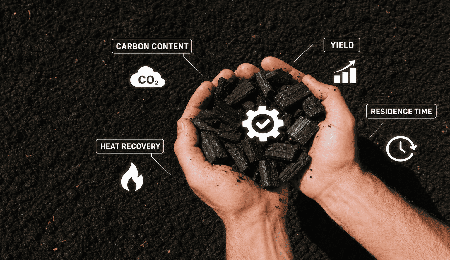 What is the Pyrolysis Temperature for Biochar Production?The biochar production process is often described as a simple one: heating biomass in an oxygen-free environment until it is converted into a stable, carbon-rich, black solid. However, in practical applications, the temperature during pyrolysis has a significant impact on the properties of the resulting biochar, the yield, the composition of the released gases and vapors, and the overall economic viability of the production process.
So, what is the typical pyrolysis temperature for biochar production?2026-08-28 -
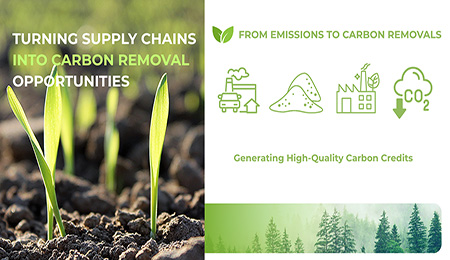 How Biochar Carbon Removal Enables Supply Chain DecarbonizationAs global companies accelerate their transition toward net-zero emissions, traditional carbon reduction strategies are no longer enough. In the past decade, many organizations have focused on improving energy efficiency, increasing renewable energy adoption, and reducing emissions from their own operations. However, companies are now facing a more complex challenge: reducing emissions generated throughout their global supply chains.2026-08-04