
.jpg)
BLOG
-
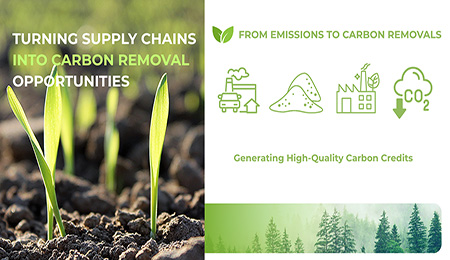 How Biochar Carbon Removal Enables Supply Chain DecarbonizationAs global companies accelerate their transition toward net-zero emissions, traditional carbon reduction strategies are no longer enough. In the past decade, many organizations have focused on improving energy efficiency, increasing renewable energy adoption, and reducing emissions from their own operations. However, companies are now facing a more complex challenge: reducing emissions generated throughout their global supply chains.2026-08-04
 -
.png) How Biochar Production Equipment Supports CRCF-Compliant Carbon Removal ProjectsWith the establishment of the EU Carbon Removal Certification Framework (CRCF), future biochar carbon removal projects must do more than simply store carbon; they must demonstrate that their biomass sourcing, production processes, carbon removal volumes, and long-term storage outcomes meet rigorous certification standards. This means biochar production equipment is no longer merely industrial machinery for boosting output and cutting costs; it has become a vital foundation for enabling data tracking, quality control, and certification compliance in carbon removal projects.
How Biochar Production Equipment Supports CRCF-Compliant Carbon Removal ProjectsWith the establishment of the EU Carbon Removal Certification Framework (CRCF), future biochar carbon removal projects must do more than simply store carbon; they must demonstrate that their biomass sourcing, production processes, carbon removal volumes, and long-term storage outcomes meet rigorous certification standards. This means biochar production equipment is no longer merely industrial machinery for boosting output and cutting costs; it has become a vital foundation for enabling data tracking, quality control, and certification compliance in carbon removal projects.
2026-07-27 -
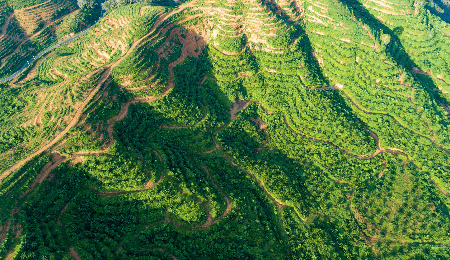 Sustainable Palm Oil in Indonesia: From Biomass Waste to Resource UtilizationIndonesia’s transition toward sustainable palm oil is increasingly linked to biomass utilization , biochar production and the development of circular biomass systems.2026-06-26
 -
 Gasification vs. Pyrolysis: Key Differences and ApplicationsGenerally speaking, the primary difference between gasification and pyrolysis lies in the presence or absence of oxygen during the thermal conversion process. In gasification, biomass is converted into a combustible gas—primarily known as syngas—by utilizing a limited and strictly controlled amount of oxygen at high temperatures. Conversely, pyrolysis involves the thermal decomposition of biomass in a completely oxygen-free environment, resulting in the production of biochar, bio-oil, and fuel gases.2026-06-12
 -
 CDR International Summit 2026The CDR International Summit 2026 concluded successfully on April 24, 2026, at the iconic Shanghai Paramount, marking a significant milestone in the global carbon removal (CDR) industry. This summit brought together representatives from Brazil, Canada, France, Portugal, Switzerland, UK, Thailand, Malaysia, Japan, Cambodia, India, Singapore, Vietnam, and regions like Hong Kong and Macau, to discuss the development trends and future pathways of the global carbon removal industry.2026-04-28
 -
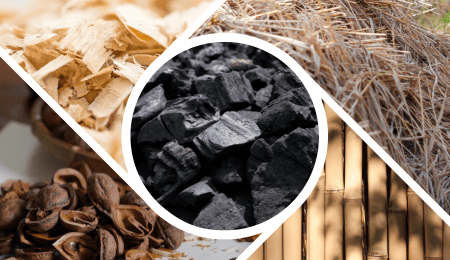 Scaling Biochar Production for CDR: Key Challenges and SolutionsScaling biochar production is a critical pathway for achieving large-scale carbon removal. With the vigorous growth of voluntary carbon markets, biochar will become a vital component of the carbon market in the future.2026-03-02