

How Biochar Carbon Removal Enables Supply Chain Decarbonization
As global companies accelerate their transition toward net-zero emissions, traditional carbon reduction strategies are no longer enough. In the past decade, many organizations have focused on improving energy efficiency, increasing renewable energy adoption, and reducing emissions from their own operations. However, companies are now facing a more complex challenge: reducing emissions generated throughout their global supply chains.
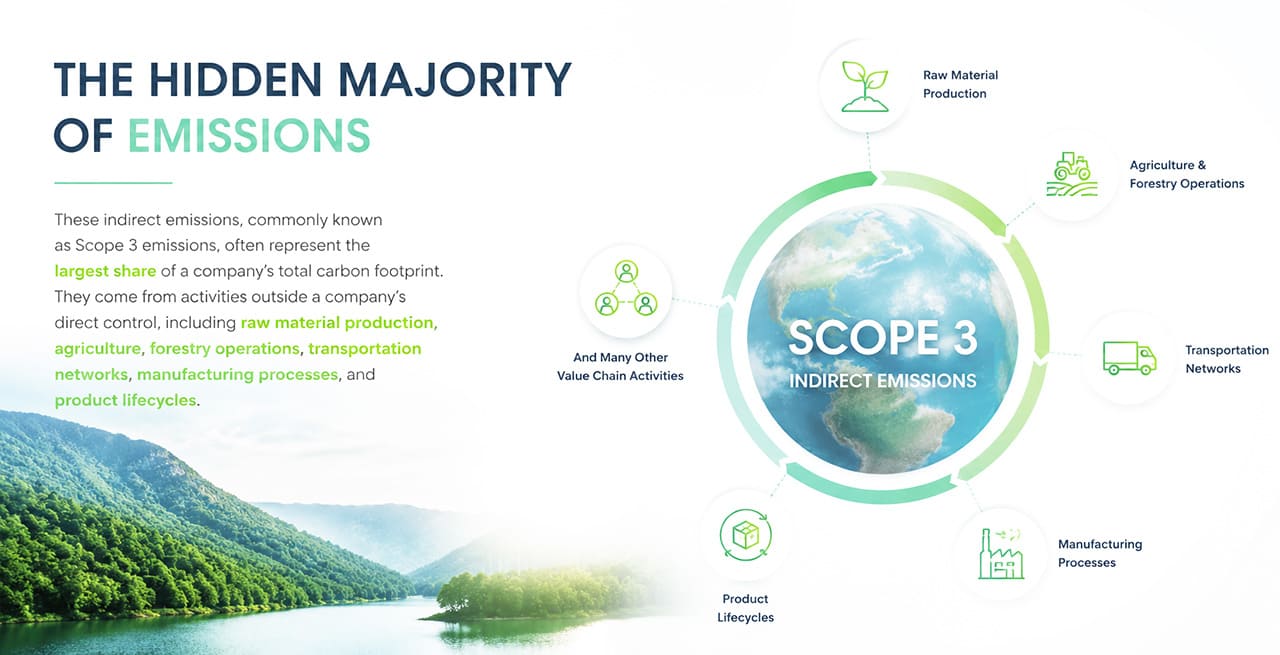
These indirect emissions, commonly known as Scope 3 emissions, often represent the largest share of a company's total carbon footprint. They come from activities outside a company's direct control, including raw material production, agriculture, forestry operations, transportation networks, manufacturing processes, and product lifecycles.
For industries such as food production, consumer goods, furniture manufacturing, agriculture, and forestry, supply chain emissions can account for the majority of their climate impact. While companies can directly manage emissions from their own facilities, reducing emissions from thousands of suppliers across different countries remains extremely challenging.
This challenge has increased demand for solutions that allow companies to create measurable climate impact beyond their own operations. Instead of focusing only on emission avoidance, businesses are increasingly exploring carbon removal solutions that can permanently remove carbon dioxide from the atmosphere.
Among emerging carbon removal technologies, biochar carbon removal has gained significant attention because it connects sustainable biomass management, renewable energy generation, and long-term carbon storage into a single solution.
What Is Biochar Carbon Removal and How Does It Work?
Converting Biomass Residues Into Stable Carbon Storage
Biochar carbon removal is a carbon dioxide removal approach that transforms biomass materials into a stable carbon-rich product through pyrolysis. During this process, organic materials are heated under controlled oxygen conditions, preventing complete combustion and preserving carbon in a highly stable form.Unlike conventional biomass disposal methods, such as open burning, landfill disposal, or natural decomposition, pyrolysis changes the carbon cycle by converting biomass carbon into biochar that can remain stored for hundreds or even thousands of years.
The process begins with biomass absorbing carbon dioxide from the atmosphere through photosynthesis. When agricultural residues, forestry waste, or other biomass materials are converted into biochar instead of decomposing naturally, a portion of the captured carbon is locked into a durable form.
Common feedstocks for biochar production include forestry residues, wood chips, sawdust, agricultural waste, rice husks, sugarcane bagasse, palm oil residues, and other organic by-products from industrial activities.
This ability to transform renewable biomass into long-term carbon storage makes biochar one of the most promising durable carbon removal technologies available today.
Why Companies Choose Biochar for Supply Chain Decarbonization?
Addressing Difficult-to-Reduce Scope 3 Emissions
Scope 3 emissions remain one of the biggest challenges in corporate climate strategies because they are generated throughout complex supplier networks.For example, a global food company may rely on agricultural suppliers that produce millions of tons of crop residues every year. A furniture manufacturer may generate large volumes of sawdust and wood-processing waste across its supply chain. A consumer goods company may depend on thousands of suppliers whose emissions are difficult to monitor and reduce.
Although companies can improve internal energy efficiency and switch to renewable electricity, eliminating supply chain emissions completely is often unrealistic.
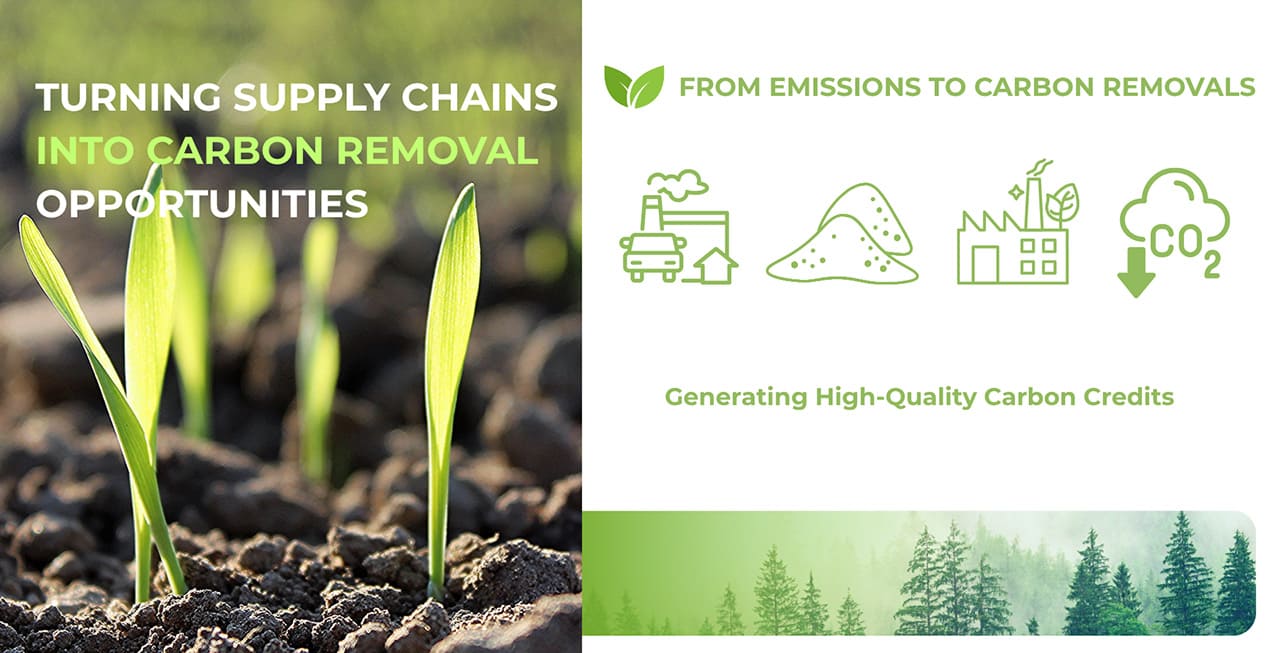
Biochar provides a practical pathway by allowing companies to work with suppliers and convert existing biomass residues into carbon removal projects. Instead of treating agricultural and forestry residues as waste, businesses can transform these materials into valuable climate assets.
Creating High-Quality Carbon Removal Credits
The carbon market is undergoing a major transformation. Companies are increasingly moving away from traditional carbon offset projects that focus mainly on avoiding future emissions and are showing stronger interest in durable carbon removal solutions.High-quality carbon removal credits require measurable, additional, and verifiable climate benefits. Biochar projects have strong potential because carbon is physically stored within the biochar material rather than simply avoiding emissions elsewhere.
A reliable biochar carbon removal project requires transparent monitoring throughout the entire process, including biomass sourcing, feedstock quantity, production conditions, biochar quality, and final carbon storage.
Modern MRV (Measurement, Reporting, and Verification) systems help companies track the real environmental impact of their investments. Technologies such as digital monitoring platforms, production data collection, lifecycle assessment, and third-party certification improve confidence in the long-term performance of biochar carbon removal projects.
As corporate demand for credible carbon removal increases, biochar is becoming an important pathway for companies seeking high-quality carbon removal credits.
How Biochar Supports Sustainable Supply Chain Development
Turning Biomass Waste Into Climate and Economic Value
Many industries currently face challenges in managing biomass residues. Forestry companies generate large amounts of sawdust, bark, wood chips, and logging residues. Agricultural industries produce crop residues, rice husks, sugarcane bagasse, nut shells, and other organic by-products. Without proper utilization, these materials may be burned, discarded, or left to decompose, creating additional greenhouse gas emissions.Biochar production provides an alternative approach by converting these residues into valuable resources. Instead of viewing biomass waste as an environmental burden, companies can create new value through carbon removal credits, renewable energy production, and biochar applications. For businesses with significant biomass availability, biochar technology creates a circular economy model where waste streams become climate solutions.
Combining Carbon Removal With Renewable Energy Generation
One of the unique advantages of biochar production technology is that it can combine carbon removal with renewable energy generation.
During the pyrolysis process, biomass produces combustible gases that can be recovered and utilized within the system. These gases can provide thermal energy for the pyrolysis reactor, supply industrial heat, support steam generation, or even contribute to power generation when producing biochar.
This integration creates multiple environmental benefits simultaneously. A biochar project can reduce biomass waste management challenges, replace fossil energy consumption, and permanently remove carbon from the atmosphere.
During the pyrolysis process, biomass produces combustible gases that can be recovered and utilized within the system. These gases can provide thermal energy for the pyrolysis reactor, supply industrial heat, support steam generation, or even contribute to power generation when producing biochar.
This integration creates multiple environmental benefits simultaneously. A biochar project can reduce biomass waste management challenges, replace fossil energy consumption, and permanently remove carbon from the atmosphere.
How Can Companies Adopt Biochar Carbon Removal Solutions?
Purchasing Verified Biochar Carbon Removal Credits
The simplest way for companies to participate in biochar carbon removal is through purchasing verified carbon removal credits.
This approach allows companies without direct access to biomass resources or production infrastructure to support climate projects and contribute to long-term carbon removal.
Many technology companies, financial institutions, consumer brands, and multinational corporations are developing carbon removal procurement strategies to complement their internal emission reduction efforts.
By investing in high-quality biochar carbon removal credits, companies can address unavoidable emissions while supporting the development of scalable climate solutions.
This approach allows companies without direct access to biomass resources or production infrastructure to support climate projects and contribute to long-term carbon removal.
Many technology companies, financial institutions, consumer brands, and multinational corporations are developing carbon removal procurement strategies to complement their internal emission reduction efforts.
By investing in high-quality biochar carbon removal credits, companies can address unavoidable emissions while supporting the development of scalable climate solutions.
Developing Biochar Projects Within Existing Supply Chains
Companies with access to biomass resources can develop biochar projects directly within their supply chains.
For example, forestry companies can utilize wood-processing residues to produce biochar. Agricultural processors can convert crop waste into carbon removal products. Food companies can collaborate with farming partners to establish decentralized biochar production networks.
Instead of transporting biomass waste away for disposal, companies can process residues locally and create additional economic value from materials that were previously considered waste.
This approach creates additional benefits by combining waste management, renewable energy generation, and carbon removal within existing industrial ecosystems.
For example, forestry companies can utilize wood-processing residues to produce biochar. Agricultural processors can convert crop waste into carbon removal products. Food companies can collaborate with farming partners to establish decentralized biochar production networks.
Instead of transporting biomass waste away for disposal, companies can process residues locally and create additional economic value from materials that were previously considered waste.
This approach creates additional benefits by combining waste management, renewable energy generation, and carbon removal within existing industrial ecosystems.
Investing in Biochar Production Infrastructure
Large corporations may also choose to invest directly in biochar production infrastructure to secure long-term carbon removal capacity.
Investment models can include purchasing biochar production equipment, establishing technology partnerships, developing joint investment projects, or implementing long-term operational partnerships. By building biochar production capacity, companies can gain greater control over carbon removal supply, improve sustainability performance, and create new revenue opportunities from biomass resources.
Investment models can include purchasing biochar production equipment, establishing technology partnerships, developing joint investment projects, or implementing long-term operational partnerships. By building biochar production capacity, companies can gain greater control over carbon removal supply, improve sustainability performance, and create new revenue opportunities from biomass resources.
Which Industries Have Biochar Carbon Removal Potential?
Forestry and Wood Processing Industries
Forestry and wood processing industries are among the most suitable sectors for biochar integration because they already generate large quantities of biomass residues. Materials such as sawdust, wood chips, bark, and processing waste can serve as reliable feedstocks for continuous biochar production systems.
Agriculture and Food Processing Industries
Agriculture and food processing industries also have significant potential for biochar-based decarbonization due to their large volumes of organic residues. Industries including sugar production, rice processing, palm oil production, and crop processing generate substantial biomass streams that can be converted into biochar.

The next phase of corporate climate strategy will move beyond mere emissions reduction to actively removing carbon from the atmosphere. Achieving net-zero targets requires a multifaceted approach that integrates emissions reduction, the adoption of renewable energy, sustainable resource management, and permanent carbon removal. As the demand for permanent carbon removal grows, biochar-based carbon removal technology is poised to become a key component of corporate climate strategies and the transformation of global supply chains.
Prev Article:
2026-07-27