

How Biochar Production Equipment Supports CRCF-Compliant Carbon Removal Projects
As the demand for high-quality carbon removal solutions grows among global enterprises and investors, the European carbon removal market is expanding rapidly. Biochar Carbon Removal (BCR)—recognized as one of the most promising technologies for permanent carbon storage—is attracting increasing attention from project developers.
Biochar is produced via pyrolysis, a process that converts sustainable biomass (such as agricultural and forestry residues) into stable carbon material. This transforms carbon that would otherwise be released through natural decomposition into a stable form capable of long-term storage in the environment.
With the establishment of the EU Carbon Removal Certification Framework (CRCF), future biochar carbon removal projects must do more than simply store carbon; they must demonstrate that their biomass sourcing, production processes, carbon removal volumes, and long-term storage outcomes meet rigorous certification standards. This means biochar production equipment is no longer merely industrial machinery for boosting output and cutting costs; it has become a vital foundation for enabling data tracking, quality control, and certification compliance in carbon removal projects.

For biochar carbon removal projects, the CRCF offers a significant opportunity to enter the European high-quality carbon market. However, it also requires project developers to meet stricter standards.
Unlike traditional biomass utilization projects, the core objective of carbon removal projects is not merely to use biomass resources, but to prove that the project achieves genuine, long-term, and quantifiable carbon storage. Consequently, projects must establish a comprehensive data chain that records information across the entire lifecycle—from biomass sourcing and the production process to the final application of the biochar.
Biochar production equipment plays a pivotal role in this process. Operational data—such as biomass input, pyrolysis temperature, biochar yield, and energy consumption—serves as the essential basis for subsequent carbon accounting and third-party verification. Therefore, for carbon removal projects targeting the European market, selecting production equipment capable of stable operation and robust data management is a crucial step toward achieving successful certification.
However, the carbon storage capacity of biochar is not determined by the raw material itself, but is closely related to the production process. Pyrolysis temperature, residence time, oxygen control, and reactor design all affect the stability, carbon content, and durability of the final biochar. Only through stable and controllable pyrolysis process can we continuously produce biochar meeting quality requirements and provide a reliable basis for subsequent carbon removal calculation.
Moreover, for project developers, the stability of production equipment not only affects daily operating efficiency, but is also directly related to the accuracy of carbon credit calculation and the long-term value of the project.
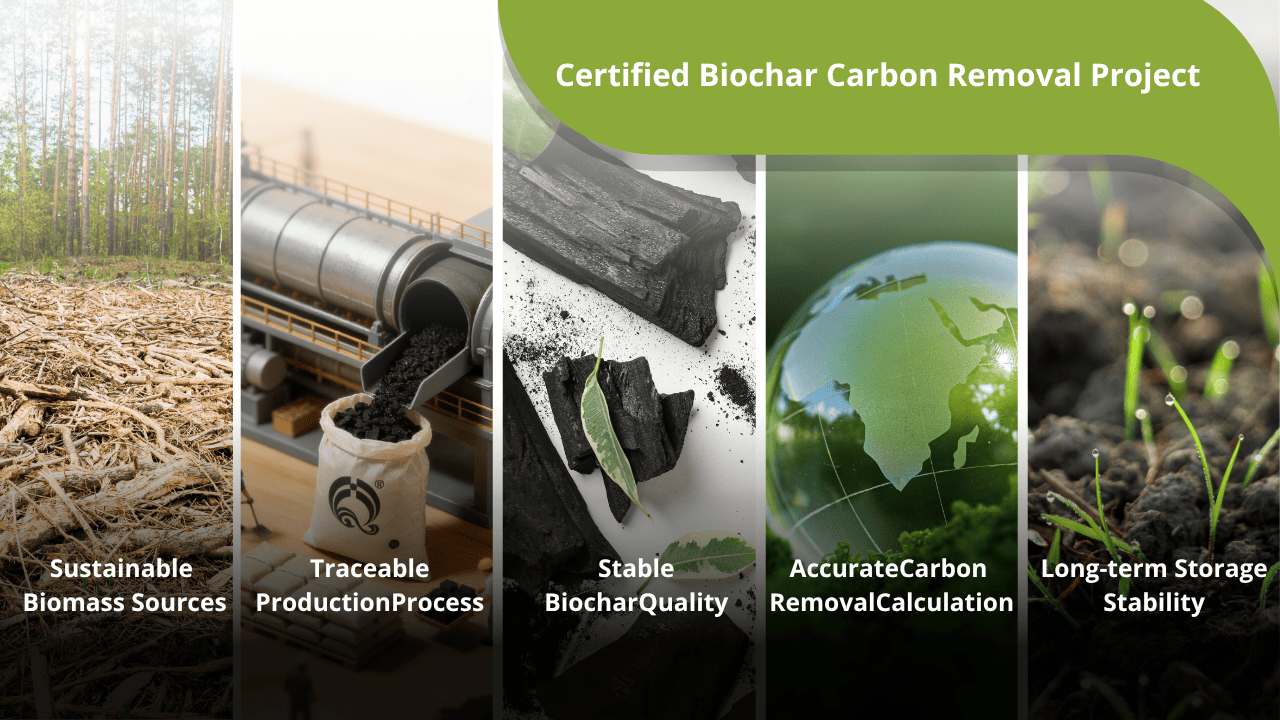
To meet certification requirements, a biochar carbon removal project must demonstrate compliance across several key areas, including:
·Sustainability of biomass sourcing;
·Traceability of the production process;
·Consistency of biochar quality;
·Accuracy of carbon removal calculations;
·Compliance of storage methods with long-term stability requirements.
These requirements imply that biochar production equipment must do more than simply "produce" material; it must also help establish a reliable data foundation for the project.
Industrial biochar equipment equipped with automatic control, real-time monitoring, and data logging capabilities can continuously collect critical production data, enabling developers to create comprehensive, traceable records. Such data supports Life Cycle Assessments (LCA), carbon accounting, and third-party certification processes.
In the future, biochar production systems that simultaneously deliver efficient production and data transparency will enjoy a competitive advantage and serve as vital infrastructure within the European carbon removal market.
Feedstocks suitable for biochar production typically include agricultural residues, forestry by-products, and other sustainably sourced biomass waste. Without this process, these materials might otherwise be directly burned, stockpiled, or left to decompose naturally, releasing their stored carbon.
For projects aligned with the Carbon Removal Certification Framework (CRCF), developers must establish a comprehensive feedstock tracking system covering sourcing, transportation, and usage. Consequently, biochar production equipment requires not only high conversion efficiency but also the flexibility to handle diverse types of biomass resources.
Advanced biochar production systems generally offer high feedstock adaptability; they can process woody biomass, agricultural residues, and other sustainable feedstocks based on regional resource availability. This helps projects mitigate supply chain risks and enhances the efficiency of local biomass resource utilization.
Combustible gases and waste heat generated in the pyrolysis process can be utilized through energy recovery systems to provide part or all of the thermal energy requirements for equipment operation. This design can reduce external energy consumption and improve system energy self-sufficiency.
For European carbon removal projects, the efficient use of pyrolysis by-product energy not only reduces operating costs, but also helps to improve life cycle carbon accounting results, resulting in higher environmental performance.
Continuous biochar production equipment offers distinct advantages, including:
·Stable production capacity;
·More consistent biochar quality;
·More continuous data recording;
·Reduced variability due to human operation.
These characteristics are particularly important for carbon removal projects, as the calculation of carbon credits often relies on long-term, accurate production data. By adopting industrial-scale continuous pyrolysis technology, project developers can establish more reliable biochar production systems, scaling up carbon removal while maintaining the data transparency required for certification.
HaiQi's industrial biomass pyrolysis and carbonization systems are designed for continuous operation and scalability, enabling project developers to convert agricultural residues, forestry waste, and other biomass resources into stable biochar products.
By optimizing reactor design, temperature control systems, and energy utilization, HaiQi equipment enhances production stability, providing a reliable foundation for carbon removal projects.
For enterprises aiming to enter the European carbon removal market, stable pyrolysis performance translates not only to higher production efficiency but also to an easier path toward establishing data systems that meet certification requirements.
HaiQi integrates automated control and intelligent monitoring technologies into its biochar production systems, enhancing operational visibility through the real-time collection and management of key data. The system enables operators to monitor parameters such as:
·Pyrolysis temperature;
·Equipment operating status;
·Biomass input volume;
·Biochar output;
·Energy consumption.
This data not only helps optimize daily production but also provides foundational support for MRV (Monitoring, Reporting, and Verification) processes.
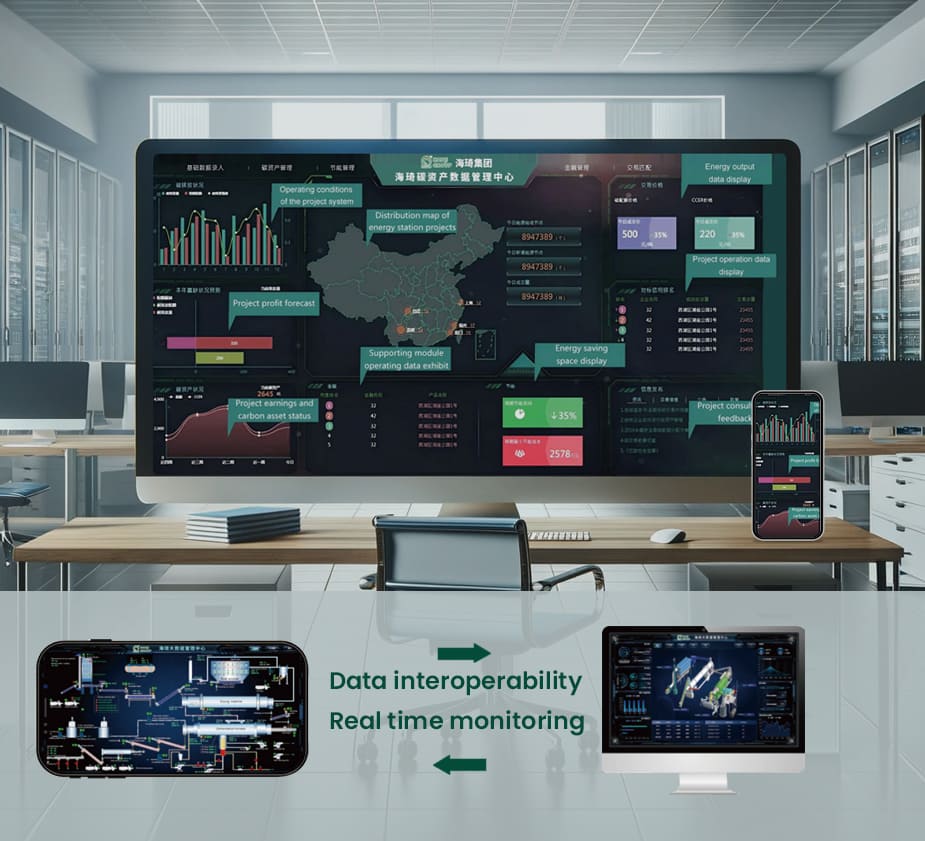
For CRCF-aligned carbon removal projects, transparent and continuous production records enable developers to communicate more effectively with certification bodies, carbon credit buyers, and investors, thereby boosting project credibility. By combining pyrolysis technology with digital management, HaiQi helps partners build reliable, traceable biochar carbon removal systems.
HaiQi's biochar production systems are adaptable to the specific resource characteristics of a project site, accommodating various types of biomass feedstock—including woody biomass, agricultural waste, and other sustainably sourced materials. By transforming low-value biomass into stable carbon-sequestering materials, biochar projects generate both environmental and economic value.
Leveraging its experience in biomass utilization and pyrolysis technology, HaiQi provides partners with comprehensive support spanning from technical solution design to project implementation. We offer flexible cooperation models—such as technical joint ventures, EPC, and EPC+C—tailored to the client's resource conditions, investment goals, and project requirements, enabling diverse partners to successfully develop biochar projects. In addition to constructing the biochar production system, we assist with carbon credit development, carbon removal certification support, and carbon asset management, helping clients efficiently enter the rapidly evolving carbon market.
Combining industrial pyrolysis technology, project development expertise, engineering know-how, and carbon removal service capabilities, HaiQi helps partners transform sustainable biomass resources into scalable carbon removal projects.
The establishment of the EU Carbon Removal Certification Framework (CRCF) has charted a new course for high-quality carbon removal projects while raising market expectations regarding project transparency, data reliability, and long-term carbon sequestration capacity. As global demand for permanent carbon removal grows, investing in scalable, traceable, and certification-ready biochar production technology is becoming a strategic priority for enterprises participating in the future carbon economy. From biomass utilization to the successful deployment of carbon removal projects, HaiQi is committed to collaborating with global partners to build scalable and verifiable biochar-based carbon removal initiatives. Contact us to explore biochar solutions tailored to your project!
Biochar is produced via pyrolysis, a process that converts sustainable biomass (such as agricultural and forestry residues) into stable carbon material. This transforms carbon that would otherwise be released through natural decomposition into a stable form capable of long-term storage in the environment.
With the establishment of the EU Carbon Removal Certification Framework (CRCF), future biochar carbon removal projects must do more than simply store carbon; they must demonstrate that their biomass sourcing, production processes, carbon removal volumes, and long-term storage outcomes meet rigorous certification standards. This means biochar production equipment is no longer merely industrial machinery for boosting output and cutting costs; it has become a vital foundation for enabling data tracking, quality control, and certification compliance in carbon removal projects.
CRCF and the Future of Biochar Carbon Removal
The EU Carbon Removal Certification Framework (CRCF)
The EU Carbon Removal Certification Framework (CRCF) aims to establish a unified, transparent system for identifying and recognizing high-quality carbon removal activities. By setting clear certification rules, the CRCF seeks to build confidence among policymakers, project developers, and carbon credit buyers regarding the authenticity and effectiveness of carbon removal projects.For biochar carbon removal projects, the CRCF offers a significant opportunity to enter the European high-quality carbon market. However, it also requires project developers to meet stricter standards.
Unlike traditional biomass utilization projects, the core objective of carbon removal projects is not merely to use biomass resources, but to prove that the project achieves genuine, long-term, and quantifiable carbon storage. Consequently, projects must establish a comprehensive data chain that records information across the entire lifecycle—from biomass sourcing and the production process to the final application of the biochar.
Biochar production equipment plays a pivotal role in this process. Operational data—such as biomass input, pyrolysis temperature, biochar yield, and energy consumption—serves as the essential basis for subsequent carbon accounting and third-party verification. Therefore, for carbon removal projects targeting the European market, selecting production equipment capable of stable operation and robust data management is a crucial step toward achieving successful certification.
Permanent Carbon Storage
Biochar is attracting attention in the carbon removal market primarily because of its ability to store carbon for long periods of time. In its natural state, most biomass decomposes within months or years, releasing stored carbon back into the atmosphere. Biochar formed by pyrolysis has a more stable carbon structure and can be stored in soil or other application environments for a long time, thus achieving long-term removal of atmospheric carbon.However, the carbon storage capacity of biochar is not determined by the raw material itself, but is closely related to the production process. Pyrolysis temperature, residence time, oxygen control, and reactor design all affect the stability, carbon content, and durability of the final biochar. Only through stable and controllable pyrolysis process can we continuously produce biochar meeting quality requirements and provide a reliable basis for subsequent carbon removal calculation.
Moreover, for project developers, the stability of production equipment not only affects daily operating efficiency, but is also directly related to the accuracy of carbon credit calculation and the long-term value of the project.
Biochar Certification
As the carbon market shifts toward high-quality carbon removal, biochar projects must provide robust evidence of their environmental performance.To meet certification requirements, a biochar carbon removal project must demonstrate compliance across several key areas, including:
·Sustainability of biomass sourcing;
·Traceability of the production process;
·Consistency of biochar quality;
·Accuracy of carbon removal calculations;
·Compliance of storage methods with long-term stability requirements.
These requirements imply that biochar production equipment must do more than simply "produce" material; it must also help establish a reliable data foundation for the project.
Industrial biochar equipment equipped with automatic control, real-time monitoring, and data logging capabilities can continuously collect critical production data, enabling developers to create comprehensive, traceable records. Such data supports Life Cycle Assessments (LCA), carbon accounting, and third-party certification processes.
In the future, biochar production systems that simultaneously deliver efficient production and data transparency will enjoy a competitive advantage and serve as vital infrastructure within the European carbon removal market.
Designing Biochar Plants for Long-Term Carbon Removal
Sustainable Feedstock
Sustainable biomass sourcing is the cornerstone of high-quality carbon removal projects. The climate value of a biochar project depends not only on the amount of carbon ultimately sequestered but also on whether the biomass used adheres to principles of sustainable utilization. If the source of feedstock is unclear, or if the biomass utilization process causes additional environmental impacts, the project's overall carbon removal benefits may be diminished.Feedstocks suitable for biochar production typically include agricultural residues, forestry by-products, and other sustainably sourced biomass waste. Without this process, these materials might otherwise be directly burned, stockpiled, or left to decompose naturally, releasing their stored carbon.
For projects aligned with the Carbon Removal Certification Framework (CRCF), developers must establish a comprehensive feedstock tracking system covering sourcing, transportation, and usage. Consequently, biochar production equipment requires not only high conversion efficiency but also the flexibility to handle diverse types of biomass resources.
Advanced biochar production systems generally offer high feedstock adaptability; they can process woody biomass, agricultural residues, and other sustainable feedstocks based on regional resource availability. This helps projects mitigate supply chain risks and enhances the efficiency of local biomass resource utilization.
Energy Efficiency
Energy efficiency is an important factor affecting the overall environmental benefits of biochar removal projects. Although biochar production itself can achieve long-term carbon storage, the production process still requires energy. If the facility relies heavily on external fossil energy sources for heating, it may increase project life-cycle carbon emissions and reduce final carbon removal. Therefore, modern biochar production equipment is paying more and more attention to energy recovery and internal energy utilization.Combustible gases and waste heat generated in the pyrolysis process can be utilized through energy recovery systems to provide part or all of the thermal energy requirements for equipment operation. This design can reduce external energy consumption and improve system energy self-sufficiency.
For European carbon removal projects, the efficient use of pyrolysis by-product energy not only reduces operating costs, but also helps to improve life cycle carbon accounting results, resulting in higher environmental performance.
.png)
Continuous Operation
Industrial-scale carbon removal projects require stable, long-term production capabilities. Unlike laboratory equipment or small-scale demonstration systems, commercial biochar projects typically operate continuously over many years to process large volumes of biomass and produce verifiable carbon removal outcomes.Continuous biochar production equipment offers distinct advantages, including:
·Stable production capacity;
·More consistent biochar quality;
·More continuous data recording;
·Reduced variability due to human operation.
These characteristics are particularly important for carbon removal projects, as the calculation of carbon credits often relies on long-term, accurate production data. By adopting industrial-scale continuous pyrolysis technology, project developers can establish more reliable biochar production systems, scaling up carbon removal while maintaining the data transparency required for certification.
How HaiQi Supports CRCF-Ready Biochar Projects?
Advanced Pyrolysis Technology
At the heart of high-quality biochar carbon removal projects lies pyrolysis technology capable of consistently producing biochar that meets specific standards. Since biochar quality directly impacts carbon content, stability, and subsequent carbon accounting results, production equipment must maintain stable pyrolysis conditions over the long term and minimize process fluctuations.HaiQi's industrial biomass pyrolysis and carbonization systems are designed for continuous operation and scalability, enabling project developers to convert agricultural residues, forestry waste, and other biomass resources into stable biochar products.
By optimizing reactor design, temperature control systems, and energy utilization, HaiQi equipment enhances production stability, providing a reliable foundation for carbon removal projects.
For enterprises aiming to enter the European carbon removal market, stable pyrolysis performance translates not only to higher production efficiency but also to an easier path toward establishing data systems that meet certification requirements.
Intelligent Operations Systems
As the carbon removal market places increasing emphasis on transparency and verifiability, digital operational capabilities are becoming a crucial component of modern biochar plants.HaiQi integrates automated control and intelligent monitoring technologies into its biochar production systems, enhancing operational visibility through the real-time collection and management of key data. The system enables operators to monitor parameters such as:
·Pyrolysis temperature;
·Equipment operating status;
·Biomass input volume;
·Biochar output;
·Energy consumption.
This data not only helps optimize daily production but also provides foundational support for MRV (Monitoring, Reporting, and Verification) processes.
For CRCF-aligned carbon removal projects, transparent and continuous production records enable developers to communicate more effectively with certification bodies, carbon credit buyers, and investors, thereby boosting project credibility. By combining pyrolysis technology with digital management, HaiQi helps partners build reliable, traceable biochar carbon removal systems.
Biomass Processing Flexibility
Different regions possess varying types of biomass resources; therefore, feedstock adaptability is a critical factor in the success of biochar projects. Many regions across Europe possess abundant resources of agricultural residues, forestry by-products, and industrial biomass waste. Projects relying on equipment capable of processing only a single feedstock may face risks related to supply shortages and operational instability.HaiQi's biochar production systems are adaptable to the specific resource characteristics of a project site, accommodating various types of biomass feedstock—including woody biomass, agricultural waste, and other sustainably sourced materials. By transforming low-value biomass into stable carbon-sequestering materials, biochar projects generate both environmental and economic value.
Project Development Support
Developing a biochar project aligned with the EU Carbon Removal Certification Framework (CRCF) requires not only advanced equipment but also comprehensive engineering expertise and project implementation capabilities. Every stage—from feedstock assessment and process design to equipment selection, system integration, and operational optimization—influences the project's ultimate economic viability and carbon removal performance.Leveraging its experience in biomass utilization and pyrolysis technology, HaiQi provides partners with comprehensive support spanning from technical solution design to project implementation. We offer flexible cooperation models—such as technical joint ventures, EPC, and EPC+C—tailored to the client's resource conditions, investment goals, and project requirements, enabling diverse partners to successfully develop biochar projects. In addition to constructing the biochar production system, we assist with carbon credit development, carbon removal certification support, and carbon asset management, helping clients efficiently enter the rapidly evolving carbon market.
Combining industrial pyrolysis technology, project development expertise, engineering know-how, and carbon removal service capabilities, HaiQi helps partners transform sustainable biomass resources into scalable carbon removal projects.
The establishment of the EU Carbon Removal Certification Framework (CRCF) has charted a new course for high-quality carbon removal projects while raising market expectations regarding project transparency, data reliability, and long-term carbon sequestration capacity. As global demand for permanent carbon removal grows, investing in scalable, traceable, and certification-ready biochar production technology is becoming a strategic priority for enterprises participating in the future carbon economy. From biomass utilization to the successful deployment of carbon removal projects, HaiQi is committed to collaborating with global partners to build scalable and verifiable biochar-based carbon removal initiatives. Contact us to explore biochar solutions tailored to your project!
Prev Article:
2026-06-26
.jpg)