


Sustainable Palm Oil in Indonesia: From Biomass Waste to Resource Utilization
Introduction
Indonesia's transition toward sustainable palm oil is increasingly linked to biomass utilization , biochar production and the development of circular biomass systems.Indonesia is the world's largest producer and exporter of palm oil. The industry spans over 16.8 million hectares of cultivated land and produces more than 50 million tons of crude palm oil annually. Accounting for nearly 60% of global supply, it holds a central position in the global palm oil system. The industry is deeply integrated into the national economy, supporting rural employment and foreign exchange earnings while driving the construction of large-scale agricultural infrastructure across various island regions.
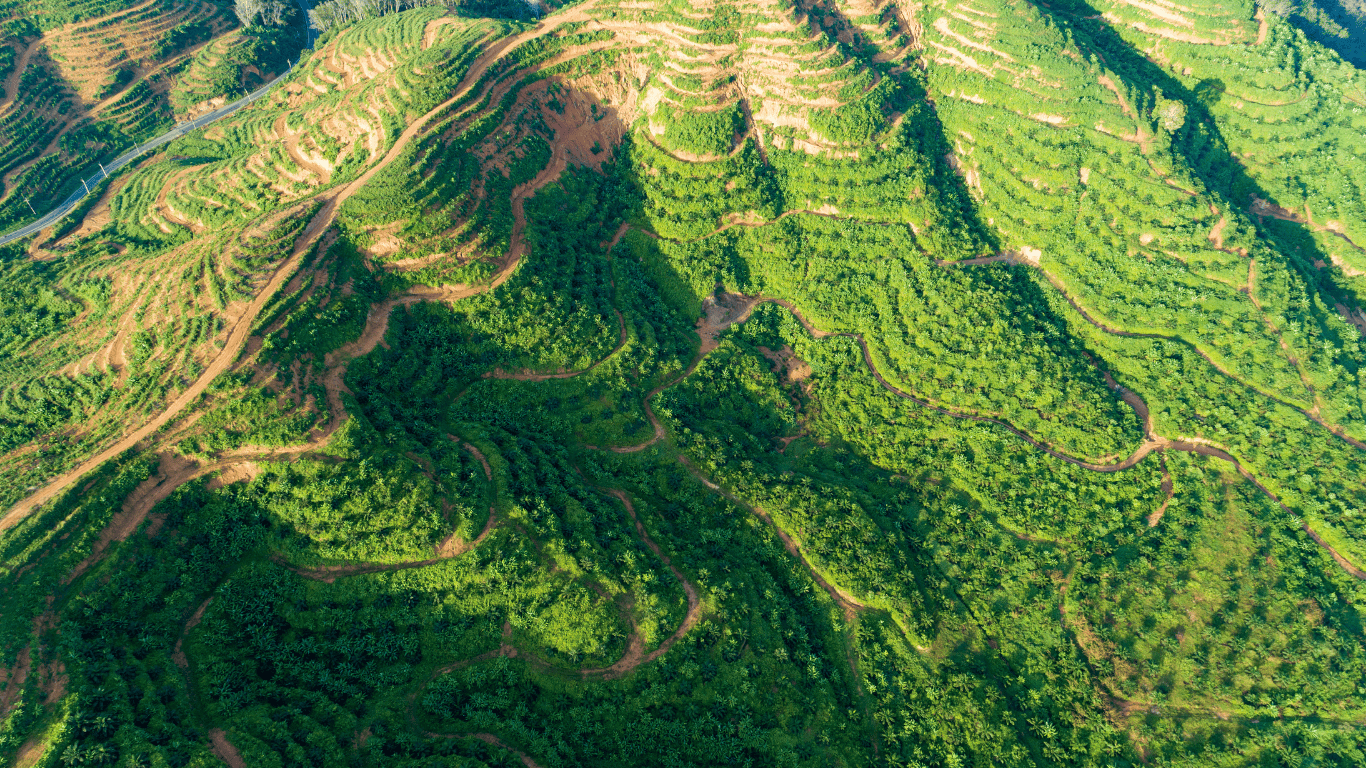
At the same time, palm oil has become one of the most controversial agricultural commodities globally. Over the past few decades, the growth in global demand has been closely linked to land-use changes in tropical regions—particularly in areas rich in forest resources and peatlands. This has sparked ongoing concern among policymakers, environmental organizations, and downstream buyers regarding the industry's environmental footprint.
Palm oil is unique not only for its environmental impact but also for the structural contradictions it embodies. It is one of the most land-efficient vegetable oils in the world, yet it is also a focal point for concerns regarding deforestation. This duality places the palm oil industry at the heart of the global transition toward agricultural sustainability.
Core Challenge: Land Expansion and Environmental Trade-offs
The debate surrounding palm oil sustainability is fundamentally rooted in how land is allocated and transformed to meet global demand. As production has expanded, vast tracts of tropical forest and carbon-rich peatlands have been converted into agricultural plantations.This expansion has been driven by a combination of strong global demand, favorable growing conditions for oil palm, and the crop's high economic value. However, converting natural ecosystems into monoculture plantations can alter carbon storage, ecosystem structure, and biodiversity
Over time, this has created a perception gap in the global market. Although palm oil boasts high yields per unit of land, its history of expansion is inextricably linked to environmental externalities that are difficult to reverse once land conversion has taken place. Consequently, the palm oil industry continues to face immense pressure regarding sustainability.
The Governance System for Sustainable Development Remains in Transition
In response to growing international scrutiny, Indonesia has progressively introduced a series of governance mechanisms aimed at improving sustainability outcomes within the palm oil industry. These measures include restricting new plantation development in ecologically sensitive areas, strengthening land licensing systems, and implementing a national sustainability certification framework.Internationally recognized standards, such as the RSPO, have influenced supply chain practices, while Indonesia's domestic ISPO framework serves as the national benchmark for sustainable production. Collectively, these systems represent an effort to standardize sustainability expectations across a highly fragmented industry.
However, the effectiveness of these governance structures is still evolving. In practice, implementation varies significantly across different regions and scales of production. A key challenge lies in the complexity of the supply chain; production is distributed among large-scale plantations and millions of smallholders, making full technical and institutional traceability difficult to achieve.
Palm Waste Biomass: An Underutilized Resource
While most discussions on sustainability focus on land use and certification, an equally important dimension of the palm oil industry has received relatively little in-depth study: the vast quantities of biomass residues generated during processing, including:- Empty Fruit Bunches (EFB)
- Palm Kernel Shells (PKS)
- Mesocarp Fiber
- Palm Oil Mill Effluent (POME)

In many instances, these residues are not fully utilized for high-value applications. Instead, they are often used in inefficient energy recovery systems, left to decompose naturally, or managed through traditional disposal methods—resulting in significant resource waste.
Biochar and Biomass Utilization: From Waste to Energy
As technology and the industry advance, perceptions of palm biomass are shifting: it is no longer viewed merely as a waste management challenge but is increasingly recognized as a vital feedstock for biomass energy. In certain applications, solid residues such as palm kernel shells are increasingly utilized as renewable fuels in industrial energy systems, partially displacing fossil fuels. This practice not only helps reduce emissions during combustion but also enhances resource efficiency within industrial clusters.Beyond energy substitution, thermal conversion technologies—such as biomass pyrolysis technology—are driving a more transformative shift by enabling the conversion of biomass into a stable carbon material: biochar.
Biochar is produced through pyrolysis, a thermochemical process that heats biomass in the absence of oxygen. Instead of burning completely into carbon dioxide, the carbon contained in the biomass is converted into a stable, carbon-rich solid known as biochar. Its highly aromatic molecular structure makes it resistant to rapid decomposition, allowing it to remain stable in soil for hundreds of years. This unique property distinguishes biochar from most other forms of organic matter and underpins its long-term stability.
When applied to soil, biochar's porous structure improves aeration and water retention, while its vast specific surface area enhances nutrient adsorption and fosters habitats for microorganisms. These properties help boost soil fertility and increase the soil's resilience against drought and nutrient leaching.
This shift holds particular significance for Indonesia's palm oil industry. The region is uniquely positioned for the development of biomass-based carbon removal. This advantage stems not only from an abundant supply of feedstock but also from the high concentration of palm oil processing plants, which facilitates the aggregation of biomass at scale. Such a layout creates favorable conditions for directly integrating biomass pyrolysis systems into existing industrial infrastructure.
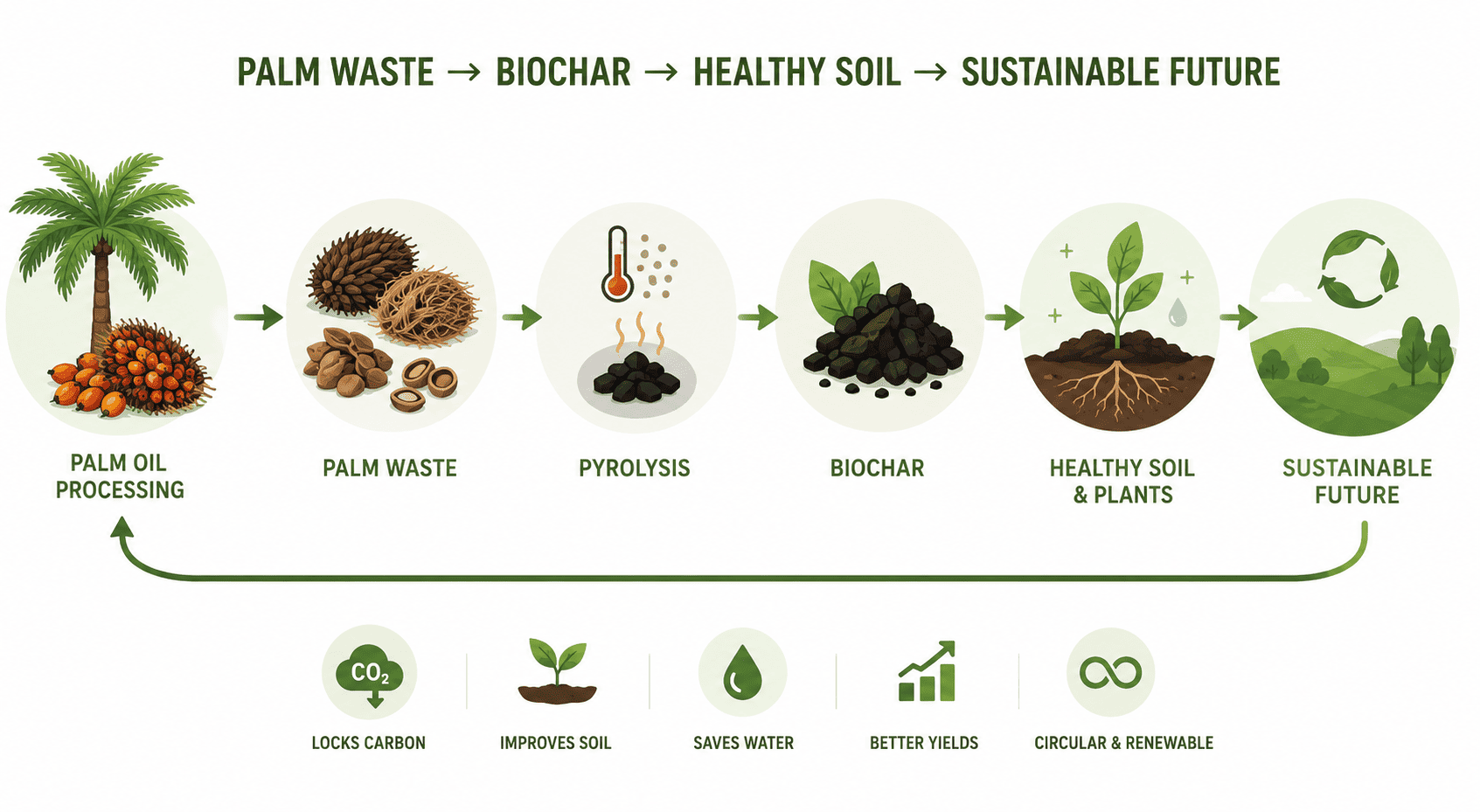
The emergence of biochar introduces a radically different perspective on oil palm residues. Rather than focusing solely on mitigating negative environmental impacts, this approach enables the reintegration of existing biomass streams into systems for energy and material utilization. If implemented at scale, biochar systems can transform palm waste into quantifiable, value-added resources while simultaneously generating agricultural economic benefits.
As Indonesia continues to improve the sustainability of its palm oil industry, the focus is gradually expanding beyond responsible cultivation to the efficient management and utilization of biomass generated throughout the production process. While challenges surrounding land use and environmental protection remain, improving the value of existing biomass resources offers a complementary pathway toward a more sustainable and resource-efficient industry. Ultimately, the development of sustainable palm oil industry in Indonesia will depend not only on how palm oil is produced, but also on how every part of the biomass resource is utilized.
Next Article:
1970-01-01

.jpg)