

Gasification vs. Pyrolysis: Key Differences and Applications
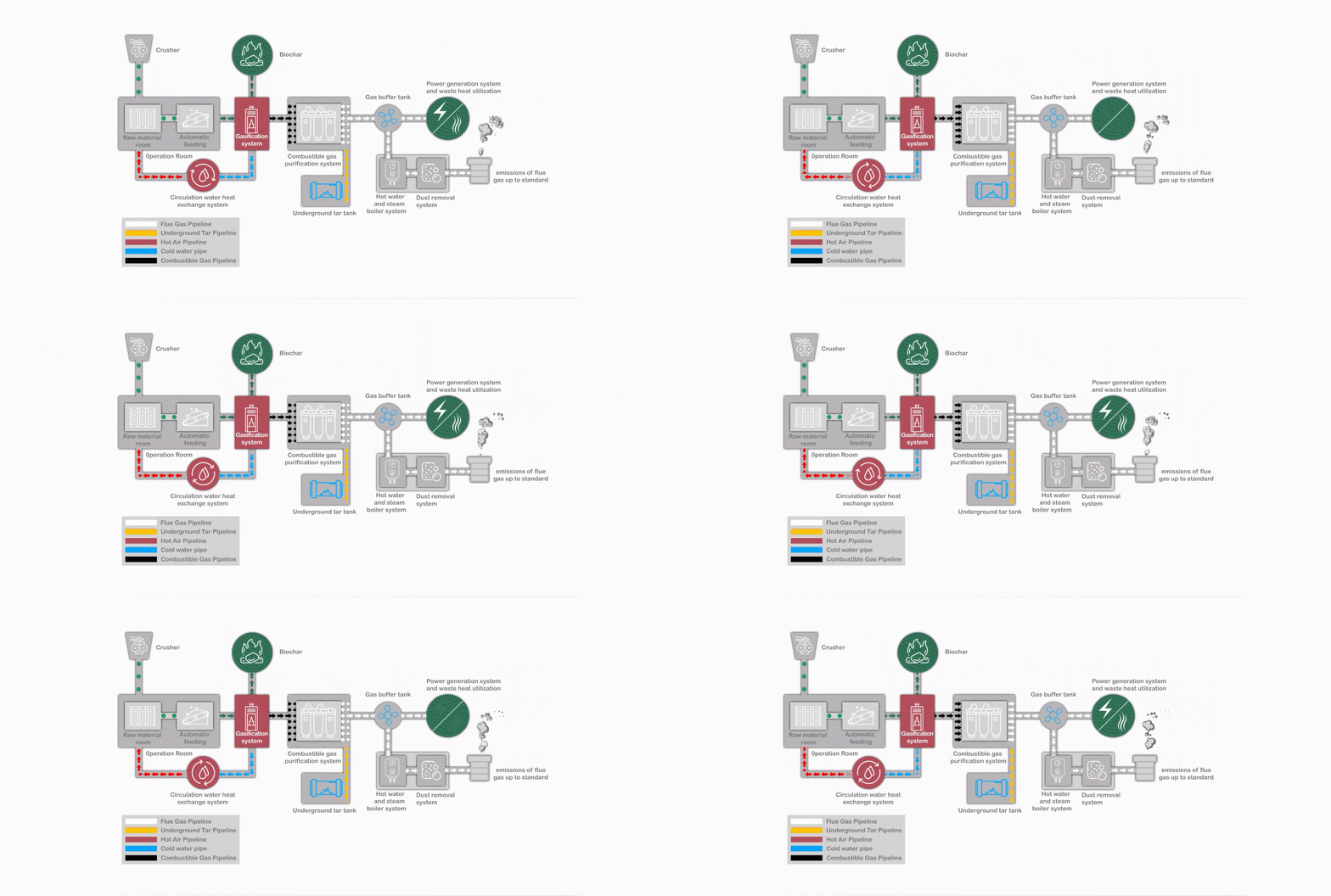
Generally speaking, the primary difference between gasification and pyrolysis lies in the presence or absence of oxygen during the thermal conversion process. In gasification, biomass is converted into a combustible gas—primarily known as syngas—by utilizing a limited and strictly controlled amount of oxygen at high temperatures. Conversely, pyrolysis involves the thermal decomposition of biomass in a completely oxygen-free environment, resulting in the production of biochar, bio-oil, and fuel gases.
Both gasification and pyrolysis offer unique advantages and present distinct technical challenges. No single technology is universally superior in every scenario, and the optimal choice depends entirely on your target products, local market conditions, and the overall economic profitability of the project.
Conversely, if your goal is to manufacture solid and liquid products such as biochar, bio-oil, and other high-value materials, pyrolysis is typically more appropriate. In a pyrolysis system, a significantly larger portion of the carbon is retained in its solid form, and the proportion of liquid output is much higher. This is beyond the reach of gasification technology.
However, for feedstocks with a high ash content or volatile, fluctuating compositions, developers must pay close attention to issues like slagging, tar formation, and syngas purification requirements. Furthermore, moisture content is a critical operational factor. High-moisture feedstocks drastically increase the energy consumption of both gasification and pyrolysis systems, making drying and preprocessing essential, high-priority stages in the initial project design.
.jpg)
On the other hand, in markets with a stable, growing demand for biochar, activated carbon feedstocks, soil conditioners, or certified Carbon Dioxide Removal products, pyrolysis projects can generate superior value. This allows project developers to capitalize on diversified, premium product streams rather than relying solely on local grid prices. Therefore, before finalizing a technological pathway, project leaders must thoroughly analyze the local demand for electricity, thermal energy, solid carbon products, and liquid bio-fuels.
In other advanced systems, the syngas generated via gasification undergoes rigorous downstream conditioning to be transformed into pure hydrogen, Sustainable Aviation Fuel, or green chemicals. Thanks to continuous technological breakthroughs, gasification and pyrolysis can now even be integrated within a single, co-located facility to optimize resource utilization, maximize thermal efficiency, and significantly boost economic returns. Ultimately, choosing between gasification and pyrolysis is not about selecting the most advanced technology, but rather about selecting the technology that aligns perfectly with your specific feedstock profile, operational goals, and financial targets.
Whether your available feedstock consists of wood processing residues, agricultural waste, palm biomass, rice husks, crop stalks, or other organic waste streams, the HaiQi team is here to help you evaluate its energy potential and determine the most profitable technical route. Our end-to-end services cover every stage of the project lifecycle, including initial project assessment, detailed process engineering, equipment manufacturing, installation, and final commissioning.
Contact us today for a free preliminary project assessment and technical consultation, and discover how to unlock greater value from your biomass resources!
The Core Distinction: The Presence of Oxygen
The presence or absence of oxygen fundamentally alters the thermochemical reactions that take place within the system, which in turn significantly changes the physical and chemical properties of the final end-products.Gasification (Limited Oxygen)
Gasification is achieved by supplying a restricted amount of oxygen or air that is insufficient for complete combustion to occur. The ultimate goal of this process is to convert organic matter into a combustible gaseous mixture known as syngas, or synthesis gas. Syngas consists primarily of carbon monoxide (CO) and hydrogen (H₂). It represents a highly versatile energy carrier that can be utilized directly for power generation and industrial heating. Furthermore, it serves as a crucial foundation for advanced applications, such as hydrogen production or acting as a chemical feedstock for manufacturing liquid synthetic fuels and various chemical products.Pyrolysis (No Oxygen)
Pyrolysis is a thermochemical process that involves heating and decomposing organic materials in a completely oxygen-free environment. The feedstock is heated to elevated temperatures until its complex molecular structures break down into simpler chemical compounds. Because no oxidation reactions occur, pyrolysis is predominantly an endothermic process, meaning it requires a continuous external heat source to sustain the chemical breakdown. This technology typically yields three major valuable byproducts, which include biochar, a carbon-rich solid residue; bio-oil, a complex liquid fraction; and a non-condensable combustible fuel gas.Gasification vs. Pyrolysis: A Quick Comparison
| Parameter | Pyrolysis | Gasification |
| Oxygen Conditions | Oxygen-free | Limited oxygen supply |
| Main Products | Biochar + Bio-oil | Syngas |
| Gas Yield | Low | High |
| Liquid Yield | Medium to High | Low |
| Solid Product Yield | Medium (Biochar) | Low (Ash and Char Residue) |
| Carbon Retention | Higher | Lower |
| Typical Applications | Biochar production, activated carbon feedstock, carbon removal projects, bio-oil production | Power generation, industrial heating, hydrogen production, methanol and synthetic fuel production |
How to Choose the Most Suitable Technology for Your Project?
Both gasification and pyrolysis offer unique advantages and present distinct technical challenges. No single technology is universally superior in every scenario, and the optimal choice depends entirely on your target products, local market conditions, and the overall economic profitability of the project.Evaluating Your Desired Final Products
If your primary objective is to maximize the yield of combustible gas for electricity generation, industrial steam, heating, or synthetic fuel synthesis, gasification is usually the superior choice. Because the vast majority of the organic matter is converted into gas, gasification systems feature exceptionally high gas yields and provide a robust foundation for downstream energy applications.Conversely, if your goal is to manufacture solid and liquid products such as biochar, bio-oil, and other high-value materials, pyrolysis is typically more appropriate. In a pyrolysis system, a significantly larger portion of the carbon is retained in its solid form, and the proportion of liquid output is much higher. This is beyond the reach of gasification technology.
Analyzing Feedstock Characteristics
Different feedstocks are suited to different thermochemical conversion pathways. For relatively homogeneous biomass feedstocks—such as wood chips, sawdust, and clean agricultural residues—both technologies have been successfully commercialized and deployed worldwide.However, for feedstocks with a high ash content or volatile, fluctuating compositions, developers must pay close attention to issues like slagging, tar formation, and syngas purification requirements. Furthermore, moisture content is a critical operational factor. High-moisture feedstocks drastically increase the energy consumption of both gasification and pyrolysis systems, making drying and preprocessing essential, high-priority stages in the initial project design.
Assessing Regional Energy Demands and Market Conditions
In many cases, regional market dynamics play a more decisive role in project success than the technical aspects of the machinery itself. In regions characterized by high electricity prices or massive industrial steam demands, gasification projects often yield highly attractive financial returns because their primary output is readily dispatchable energy.On the other hand, in markets with a stable, growing demand for biochar, activated carbon feedstocks, soil conditioners, or certified Carbon Dioxide Removal products, pyrolysis projects can generate superior value. This allows project developers to capitalize on diversified, premium product streams rather than relying solely on local grid prices. Therefore, before finalizing a technological pathway, project leaders must thoroughly analyze the local demand for electricity, thermal energy, solid carbon products, and liquid bio-fuels.
Considering Overall Efficiency and Value Chain Integration
In modern bioenergy and waste-to-energy projects, the focus is shifting from merely maximizing a single product's yield toward comprehensive value chain integration. For instance, in certain configurations, the non-condensable gases produced during pyrolysis are recycled and combusted to provide the thermal energy required for the process itself or nearby industrial operations.In other advanced systems, the syngas generated via gasification undergoes rigorous downstream conditioning to be transformed into pure hydrogen, Sustainable Aviation Fuel, or green chemicals. Thanks to continuous technological breakthroughs, gasification and pyrolysis can now even be integrated within a single, co-located facility to optimize resource utilization, maximize thermal efficiency, and significantly boost economic returns. Ultimately, choosing between gasification and pyrolysis is not about selecting the most advanced technology, but rather about selecting the technology that aligns perfectly with your specific feedstock profile, operational goals, and financial targets.
Still Not Sure Which Technology Is Right for Your Project?
At HaiQi, we are dedicated to providing global clients with comprehensive, state-of-the-art biomass energy conversion and waste management solutions. Our core areas of expertise encompass advanced biomass gasification systems, high-yield pyrolysis and biochar production plants, eco-friendly power generation, combined heat and power systems, and high-efficiency syngas utilization solutions.Whether your available feedstock consists of wood processing residues, agricultural waste, palm biomass, rice husks, crop stalks, or other organic waste streams, the HaiQi team is here to help you evaluate its energy potential and determine the most profitable technical route. Our end-to-end services cover every stage of the project lifecycle, including initial project assessment, detailed process engineering, equipment manufacturing, installation, and final commissioning.
Contact us today for a free preliminary project assessment and technical consultation, and discover how to unlock greater value from your biomass resources!
Next Article:
1970-01-01
RELATED Blog