

What is the Difference Between Direct and Indirect Heating in Biochar Production?
Heating is central to biochar pyrolysis systems. Biomass must be heated to the required pyrolysis temperature within a controlled, oxygen-limited environment to convert organic matter into biochar and combustible gases, rather than simply burning the feedstock.
Consequently, the method used to heat the biomass is a critical aspect of equipment design for commercial biochar production.
The two fundamental methods are direct heating and indirect heating. In direct heating systems, high-temperature combustion gases or flames come into direct contact with the biomass. In indirect heating systems, the combustion process is separated from the pyrolysis chamber, and heat is transferred to the biomass through the reactor wall or a dedicated heat-transfer surface.
A furnace or combustion chamber generates high-temperature gases. Instead of coming into direct contact with the biomass, the thermal energy is transferred through the reactor wall or a dedicated heat-transfer surface. Thus, the biomass is heated from outside the pyrolysis zone.
As the feedstock temperature rises, moisture is released first. Once the required pyrolysis temperature is reached, the organic components of the biomass undergo thermal decomposition, producing biochar, pyrolysis gas, and other condensable products, depending on the feedstock and process conditions.
The key principle is simple: the biomass is heated but is not directly exposed to the combustion process.
This distinction alters the design and control requirements of the pyrolysis system.
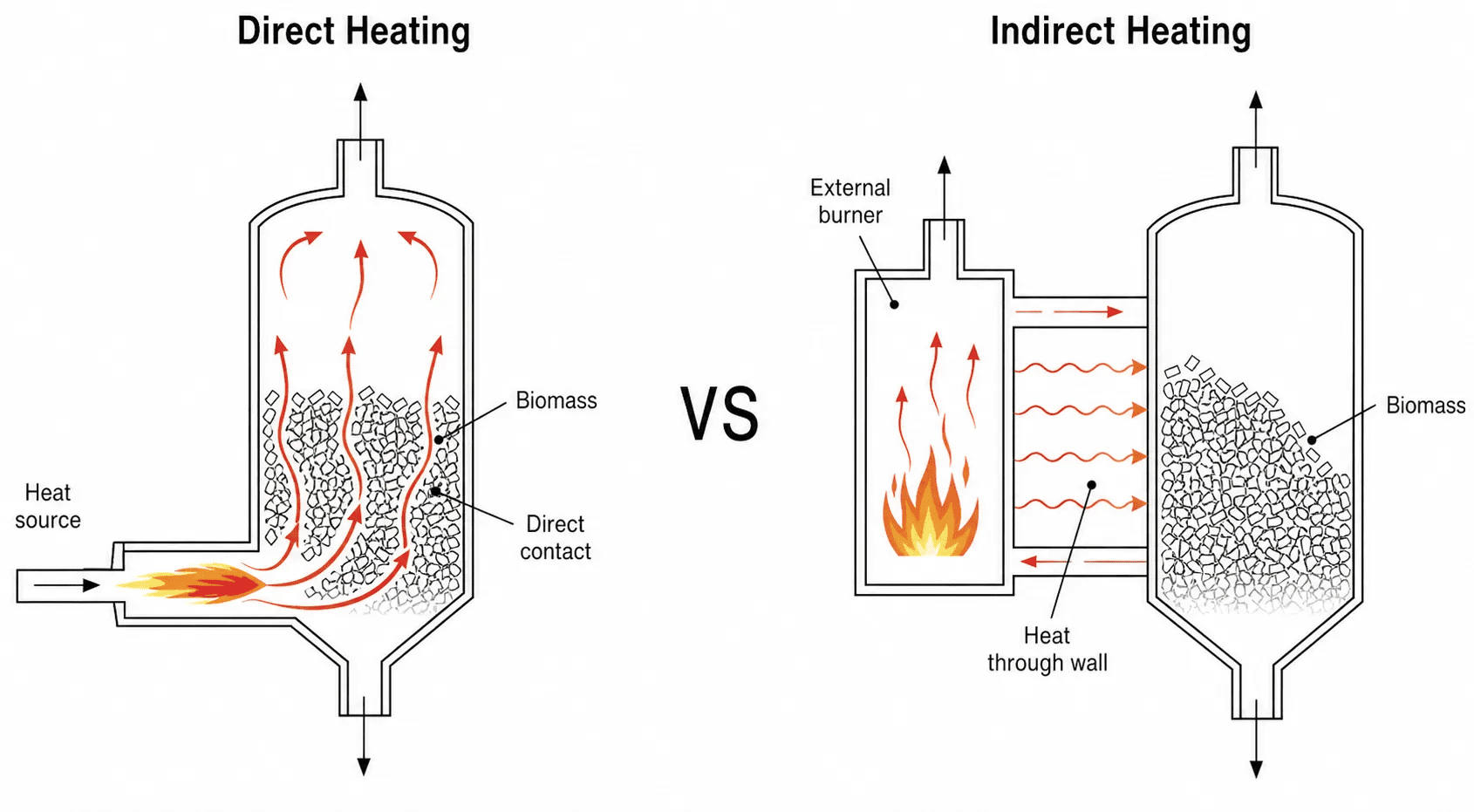
In direct heating configurations, combustion gases can come into direct contact with the biomass. In an indirect heating configuration, combustion gases remain on the heating side of the system, while the biomass stays within the pyrolysis chamber.
This separation allows the pyrolysis environment to be controlled independently of the combustion process.
This separation also allows for better control over heat transfer. Instead of relying on direct contact between hot gases and the biomass, the heating system can be adjusted based on reactor temperature, feed rate, and specific heating zones. This is particularly useful in continuous operations, where biomass flows constantly through the reactor and must receive sufficient heat throughout the process.
Another advantage lies in the integration of pyrolysis gas and heat recovery. Because the pyrolysis gas is kept separate from the combustion process, the combustible gases generated during pyrolysis can be collected and directed to an external combustion system. Their chemical energy can be converted into thermal energy and fed back into the pyrolysis process. Residual heat in the combustion gases can also be recovered and utilized for applications such as feedstock drying.
Beyond powering the pyrolysis equipment itself, excess heat generated during the process can be utilized for feedstock drying. Moisture within the feedstock must be evaporated before the pyrolysis stage begins—a process that consumes significant thermal energy. Recovering a portion of the excess heat from pyrolysis to reduce feedstock moisture content optimizes the overall energy utilization cycle, which can be summarized as follows:
Pyrolysis gas → Combustion → Heat supply to pyrolysis equipment + Waste heat recovery → Feedstock drying
In this way, pyrolysis gas primarily meets the equipment's own energy needs, while surplus heat is repurposed for feedstock pretreatment, ensuring more efficient energy use within the system. This heat recovery approach is particularly valuable for commercial plants processing high-moisture biomass, as lowering the feedstock's moisture content reduces the energy required for the subsequent pyrolysis process.
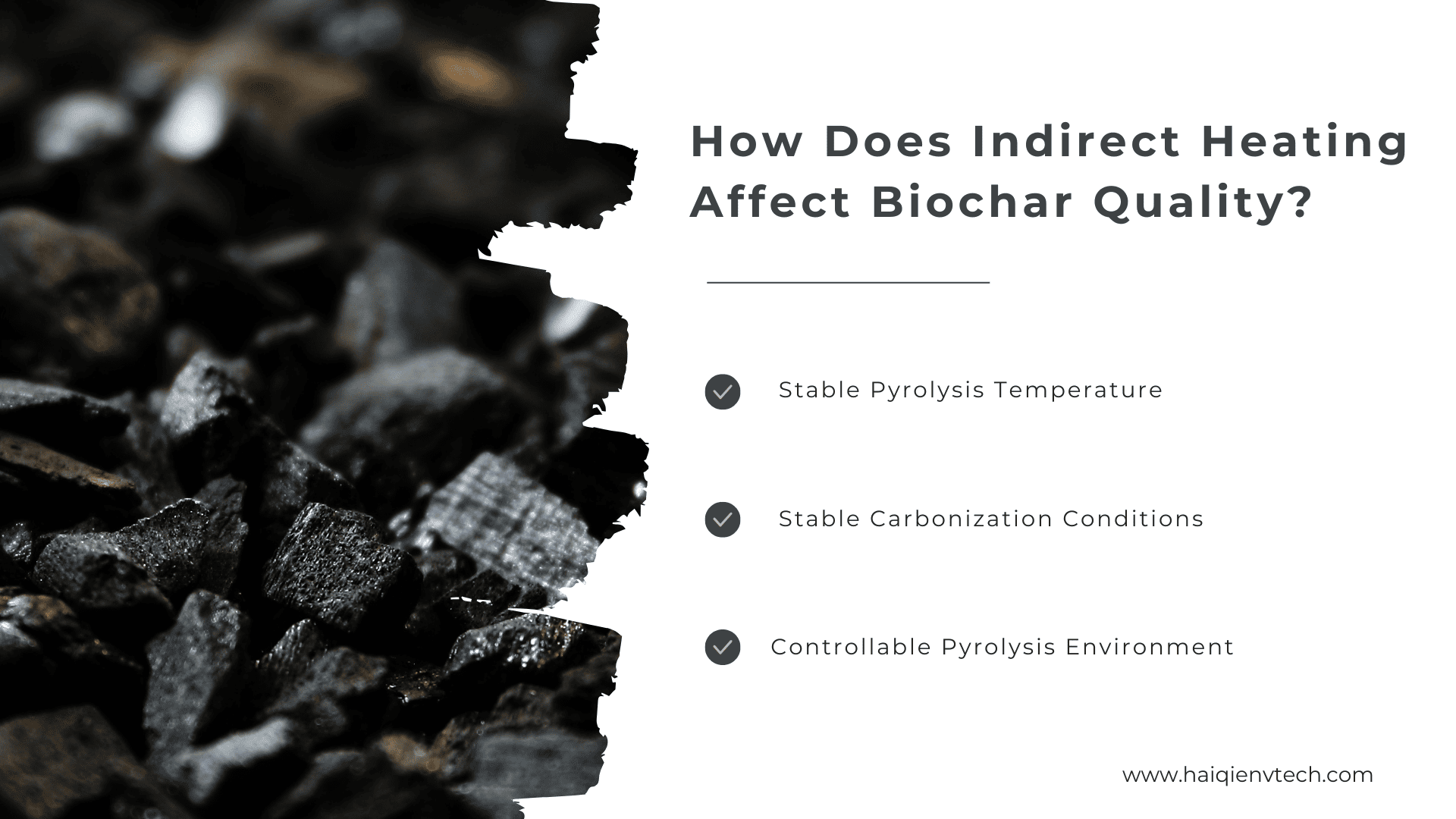
The goal of pyrolysis is the thermal decomposition of biomass, not simple combustion. By isolating the combustion zone from the pyrolysis chamber, indirect heating minimizes the likelihood of direct contact between the biomass and combustion gases or flames. This helps control the carbonization process and maintain the conditions required for biochar production.
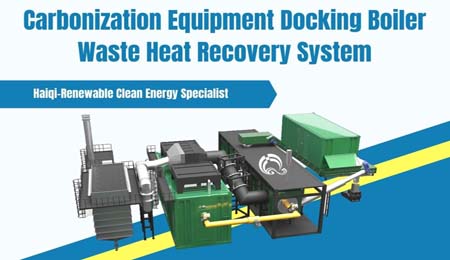
Haiqi's commercial biochar pyrolysis equipment utilizes an indirectly heated reactor design. The key advantage of this design is the ability to exercise precise control over the pyrolysis process. Since combustion gases do not come into direct contact with the biomass, the reactor maintains a relatively stable internal environment; this minimizes oxygen ingress and reduces the impact of incomplete combustion on biochar quality. For commercial biochar plants requiring long-term, continuous operation, this design—which separates pyrolysis from combustion—also facilitates independent adjustment of temperature, residence time, and heating intensity.
In actual operation, feedstock typically undergoes pretreatment—such as screening, crushing, and drying—before entering the pyrolysis system. Once inside the reactor, the biomass is continuously conveyed and gradually heated; at the set pyrolysis temperature, it releases volatile components and forms a carbon-rich solid product. Stable temperature control allows pyrolysis conditions to be adjusted according to the specific characteristics of the feedstock, ensuring the resulting biochar meets project requirements.
The treated pyrolysis gas serves as an energy source for the heating system. The heat generated from combustion maintains the operating temperature required by the pyrolysis reactor, creating an internal energy loop: biomass enters the system → pyrolysis produces biochar and pyrolysis gas → combustion of the gas generates thermal energy → thermal energy is reused in the pyrolysis process.
Moisture significantly increases energy consumption during pyrolysis, as the system must first heat and evaporate the water contained in the feedstock. Feeding high-moisture biomass directly into a pyrolysis reactor not only consumes excessive thermal energy but can also compromise the reactor's temperature stability and negatively impact the yield and quality of the final product. Consequently, practical commercial projects typically require a drying system tailored to the specific characteristics of the feedstock.
Haiqi's pyrolysis systems utilize recoverable waste heat generated during the pyrolysis process for feedstock pre-drying. For instance, high-temperature flue gas or other suitable waste heat media can supply the necessary heat to the drying system, ensuring the feedstock reaches an optimal moisture level before entering the pyrolysis reactor. This approach enhances the plant's overall energy efficiency and establishes a highly efficient internal energy circulation loop.
Automated control also minimizes the impact of manual intervention on the production process. For commercial projects requiring 24/7 continuous operation, stable automated control not only boosts equipment efficiency but also enables operators to centrally monitor the entire production line, eliminating the need for frequent manual adjustments to individual pieces of equipment.
Consequently, the method used to heat the biomass is a critical aspect of equipment design for commercial biochar production.
The two fundamental methods are direct heating and indirect heating. In direct heating systems, high-temperature combustion gases or flames come into direct contact with the biomass. In indirect heating systems, the combustion process is separated from the pyrolysis chamber, and heat is transferred to the biomass through the reactor wall or a dedicated heat-transfer surface.
What is Indirect Heating in Biochar Production?
In an indirect-heating biochar pyrolysis system, biomass is processed within a sealed or controlled pyrolysis reactor, while the heat required for pyrolysis is generated separately.A furnace or combustion chamber generates high-temperature gases. Instead of coming into direct contact with the biomass, the thermal energy is transferred through the reactor wall or a dedicated heat-transfer surface. Thus, the biomass is heated from outside the pyrolysis zone.
As the feedstock temperature rises, moisture is released first. Once the required pyrolysis temperature is reached, the organic components of the biomass undergo thermal decomposition, producing biochar, pyrolysis gas, and other condensable products, depending on the feedstock and process conditions.
The key principle is simple: the biomass is heated but is not directly exposed to the combustion process.
What is the Difference Between Direct and Indirect Heating?
Heat Transfer Method
The fundamental difference lies in how heat reaches the biomass. In direct heating, high-temperature combustion gases or flames transfer heat directly to the biomass. In indirect heating, thermal energy must pass through the reactor wall or a heat-transfer surface before reaching the biomass.This distinction alters the design and control requirements of the pyrolysis system.
(For process illustration only. Refer to the actual reactor design.)
Contact Between Combustion Gases and Biomass
In direct heating configurations, combustion gases can come into direct contact with the biomass. In an indirect heating configuration, combustion gases remain on the heating side of the system, while the biomass stays within the pyrolysis chamber.This separation allows the pyrolysis environment to be controlled independently of the combustion process.
Control of Temperature and Pyrolysis Conditions
Direct heating tightly integrates heat transfer and combustion gas management into a single process. Indirect heating, by contrast, establishes a physical barrier between these two processes. For commercial biochar production, this separation facilitates the control of reactor temperature and the maintenance of stable, oxygen-limited conditions.Impact on Biochar Production
The heating method is just one of several factors influencing biochar properties. Factors such as feedstock composition, moisture content, particle size, heating rate, pyrolysis temperature, and residence time all have significant effects. However, indirect heating reactors provide a controlled environment that supports stable and repeatable operations—qualities that are particularly important for continuous commercial biochar production.Why Is Indirect Heating Well-Suited for Continuous Commercial Biochar Production?
Continuous commercial biochar production requires a stable heat source while maintaining an oxygen-limited environment within the pyrolysis reactor. Indirect heating achieves this by separating the combustion process from the pyrolysis process. Combustion occurs outside the reactor, and the generated heat is transferred to the biomass through the reactor walls or dedicated heat-transfer surfaces. This means the reactor can maintain controlled pyrolysis conditions without direct contact with flames or combustion gases.This separation also allows for better control over heat transfer. Instead of relying on direct contact between hot gases and the biomass, the heating system can be adjusted based on reactor temperature, feed rate, and specific heating zones. This is particularly useful in continuous operations, where biomass flows constantly through the reactor and must receive sufficient heat throughout the process.
Another advantage lies in the integration of pyrolysis gas and heat recovery. Because the pyrolysis gas is kept separate from the combustion process, the combustible gases generated during pyrolysis can be collected and directed to an external combustion system. Their chemical energy can be converted into thermal energy and fed back into the pyrolysis process. Residual heat in the combustion gases can also be recovered and utilized for applications such as feedstock drying.
How Do Indirect-Heating Biochar Plants Utilize Pyrolysis Gas?
During the pyrolysis process, biomass generates a certain amount of combustible pyrolysis gas. After processing, these gases can be collected and fed into the combustion system to supply the heat required for the pyrolysis equipment. In indirectly heated pyrolysis equipment, the heat generated by burning pyrolysis gas does not enter the pyrolysis reactor directly; instead, it is transferred to the reactor via a heating system to maintain a stable pyrolysis temperature. Through this process, the gas produced from the feedstock during pyrolysis can be converted back into energy required for equipment operation, thereby reducing reliance on external fuel.Beyond powering the pyrolysis equipment itself, excess heat generated during the process can be utilized for feedstock drying. Moisture within the feedstock must be evaporated before the pyrolysis stage begins—a process that consumes significant thermal energy. Recovering a portion of the excess heat from pyrolysis to reduce feedstock moisture content optimizes the overall energy utilization cycle, which can be summarized as follows:
Pyrolysis gas → Combustion → Heat supply to pyrolysis equipment + Waste heat recovery → Feedstock drying
In this way, pyrolysis gas primarily meets the equipment's own energy needs, while surplus heat is repurposed for feedstock pretreatment, ensuring more efficient energy use within the system. This heat recovery approach is particularly valuable for commercial plants processing high-moisture biomass, as lowering the feedstock's moisture content reduces the energy required for the subsequent pyrolysis process.
How Does Indirect Heating Affect Biochar Quality?
Stable Pyrolysis Temperature
Pyrolysis temperature is a critical parameter for controlling biochar characteristics. A stable indirect heating system allows for precise control of heat input, effectively maintaining the required temperature range within the reactor. This facilitates the stable thermal conversion of the feedstock.Controllable Pyrolysis Environment
Isolating combustion gases from the biomass allows for better control over the pyrolysis environment. Biomass can be heated under oxygen-deprived conditions without relying on direct contact with combustion gases for heat transfer. This is crucial, as uncontrolled oxidation can reduce biochar yield and alter the properties of the final product.Stable Carbonization Conditions
Commercial biochar production requires stable carbonization conditions. When feedstock enters the reactor at a steady rate and parameters such as temperature, residence time, and oxygen levels are properly controlled, biochar can be produced under highly reproducible carbonization conditions.
Reduced Risk of Direct Biomass Combustion
The goal of pyrolysis is the thermal decomposition of biomass, not simple combustion. By isolating the combustion zone from the pyrolysis chamber, indirect heating minimizes the likelihood of direct contact between the biomass and combustion gases or flames. This helps control the carbonization process and maintain the conditions required for biochar production.How Does HaiQi's Biochar Equipment Work?
Haiqi's commercial biochar pyrolysis equipment utilizes an indirectly heated reactor design. The key advantage of this design is the ability to exercise precise control over the pyrolysis process. Since combustion gases do not come into direct contact with the biomass, the reactor maintains a relatively stable internal environment; this minimizes oxygen ingress and reduces the impact of incomplete combustion on biochar quality. For commercial biochar plants requiring long-term, continuous operation, this design—which separates pyrolysis from combustion—also facilitates independent adjustment of temperature, residence time, and heating intensity.
In actual operation, feedstock typically undergoes pretreatment—such as screening, crushing, and drying—before entering the pyrolysis system. Once inside the reactor, the biomass is continuously conveyed and gradually heated; at the set pyrolysis temperature, it releases volatile components and forms a carbon-rich solid product. Stable temperature control allows pyrolysis conditions to be adjusted according to the specific characteristics of the feedstock, ensuring the resulting biochar meets project requirements.
Pyrolysis Gas Recovery and Utilization
During pyrolysis, biomass not only yields biochar but also releases a certain amount of combustible pyrolysis gas. These gases—typically containing hydrogen, carbon monoxide, methane, and other light hydrocarbons—possess significant calorific value. Haiqi’s pyrolysis system collects these gases, subjects them to necessary processing based on the system design, and feeds them into the combustion system.The treated pyrolysis gas serves as an energy source for the heating system. The heat generated from combustion maintains the operating temperature required by the pyrolysis reactor, creating an internal energy loop: biomass enters the system → pyrolysis produces biochar and pyrolysis gas → combustion of the gas generates thermal energy → thermal energy is reused in the pyrolysis process.
Waste Heat Recovery and Feedstock Drying
For biomass pyrolysis plants, feedstock drying is a crucial pretreatment step, particularly for agricultural and forestry residues with high moisture content.Moisture significantly increases energy consumption during pyrolysis, as the system must first heat and evaporate the water contained in the feedstock. Feeding high-moisture biomass directly into a pyrolysis reactor not only consumes excessive thermal energy but can also compromise the reactor's temperature stability and negatively impact the yield and quality of the final product. Consequently, practical commercial projects typically require a drying system tailored to the specific characteristics of the feedstock.
Haiqi's pyrolysis systems utilize recoverable waste heat generated during the pyrolysis process for feedstock pre-drying. For instance, high-temperature flue gas or other suitable waste heat media can supply the necessary heat to the drying system, ensuring the feedstock reaches an optimal moisture level before entering the pyrolysis reactor. This approach enhances the plant's overall energy efficiency and establishes a highly efficient internal energy circulation loop.
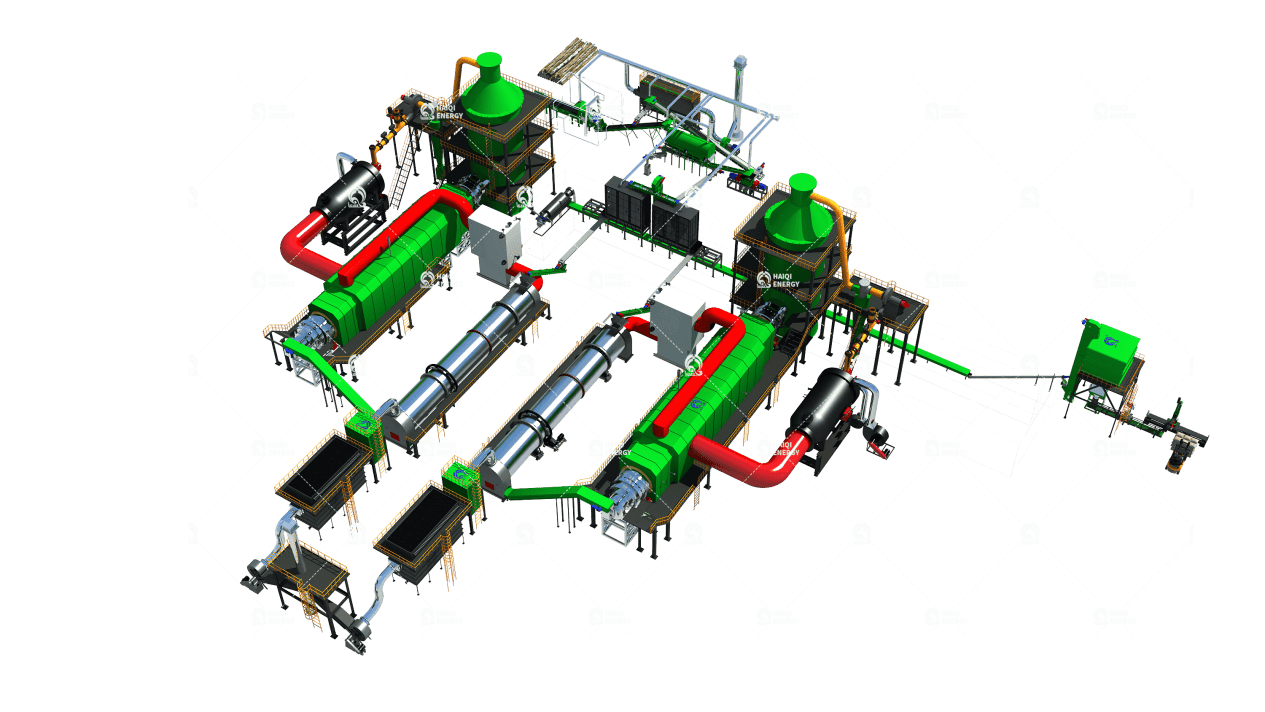
Continuous Feeding and Biochar Discharge
Continuous operation is crucial for commercial-scale projects. It minimizes heat loss associated with frequent equipment start-ups and shutdowns, allowing the pyrolysis reactor to maintain a stable operating state over extended periods. Unlike batch-type pyrolysis furnaces—which require cyclical loading, heating, cooling, and unloading—Haiqi’s biochar pyrolysis equipment features a continuous feed and discharge design; material enters the reactor continuously while the resulting biochar is simultaneously discharged. For large-scale projects processing tens or even hundreds of tons of biomass daily, this continuous design facilitates seamless integration with upstream feedstock pre-treatment and drying systems, as well as downstream biochar storage, packaging, and transport systems, creating a comprehensive continuous production workflow.Automated Process Control
The stable operation of a commercial biochar plant relies not only on the reactor itself but also on continuous monitoring of the entire pyrolysis process. Haiqi's equipment is equipped with an automated control system that monitors and regulates key parameters—such as temperature, feed rate, and heating intensity—in real time. For example, the system adjusts the feedstock feed rate and heating intensity based on preset parameters while continuously monitoring temperatures at various points within the pyrolysis reactor. If operating conditions shift, the control system automatically adjusts the relevant equipment according to preset logic, thereby maintaining stable pyrolysis conditions.Automated control also minimizes the impact of manual intervention on the production process. For commercial projects requiring 24/7 continuous operation, stable automated control not only boosts equipment efficiency but also enables operators to centrally monitor the entire production line, eliminating the need for frequent manual adjustments to individual pieces of equipment.