

Why is Food Waste Unsuitable for the Production of Biochar?
Food waste is frequently regarded as a potential resource for "turning waste into treasure" (energy recovery and resource recycling). As pyrolysis technology can convert organic matter into carbon-rich solid products, some might consider the conversion of food waste into biochar to be an effective waste management solution. However, even if food waste can be processed via pyrolysis, this does not necessarily mean it is an ideal feedstock for efficient, stable and commercially viable biochar production.
Compared with woody biomass and other agricultural wastes with relatively uniform properties, mixed food waste often presents greater challenges in terms of moisture management, feedstock consistency, contaminant control and product quality. These factors not only increase the need for pre-treatment, thereby complicating biochar production, but also limit the potential uses of the final solid product. For projects aimed at achieving "carbon removal" through biochar, additional requirements must also be considered, such as carbon stability, life-cycle emissions and compliance with certification standards.
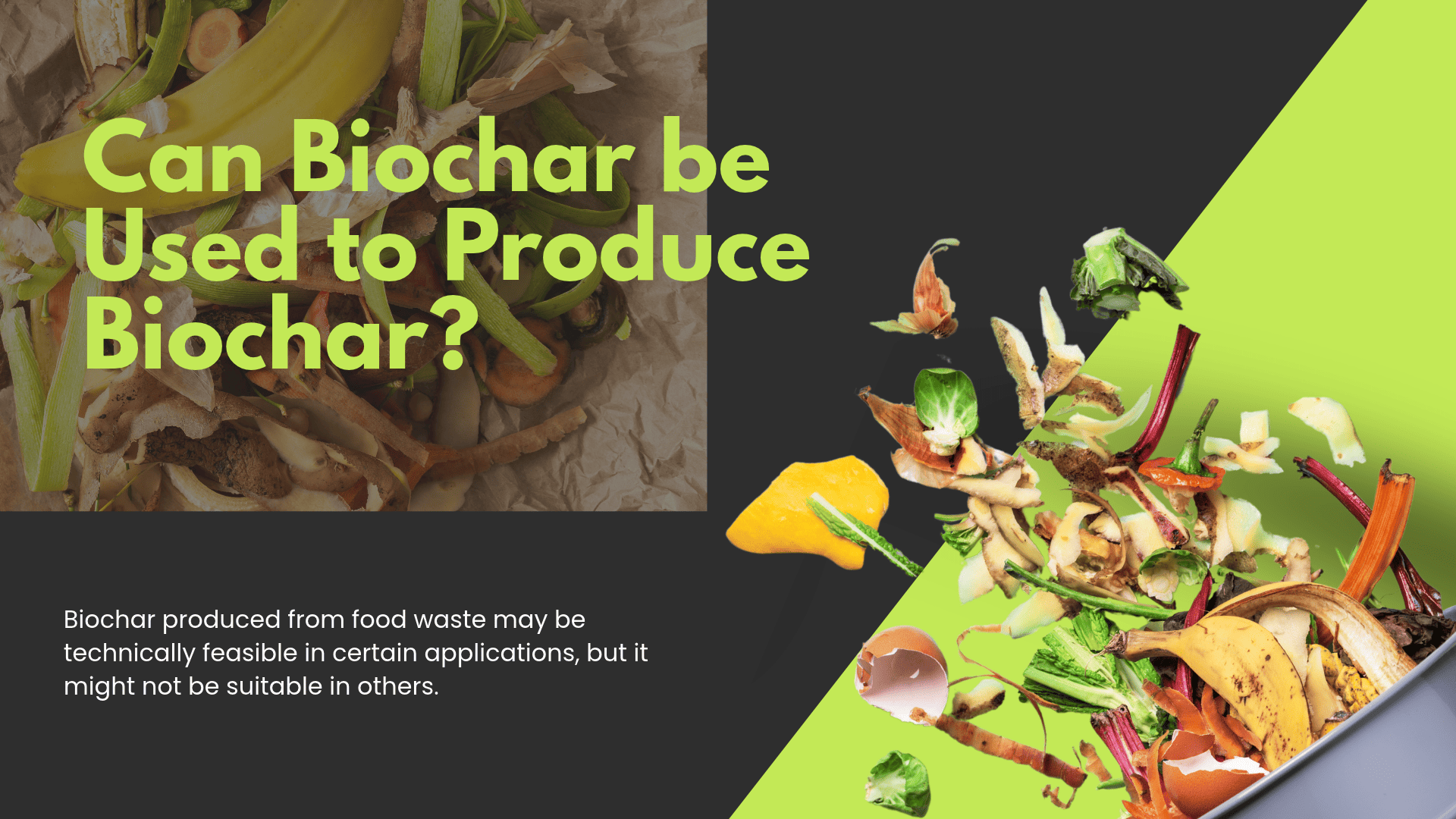
One of the main challenges facing the pyrolysis of food waste lies in its high and highly variable moisture content. Fresh fruit and vegetable waste, leftover food, and mixed food waste often contain significant amounts of moisture; this means that a large proportion of the energy input during processing is consumed by heating and evaporating this moisture, rather than being used to drive the pyrolysis reaction. In many industrial pyrolysis systems, effective processing of wet food waste often requires prior dewatering or drying. This not only increases capital expenditure but also raises operating costs and overall energy consumption.
Although the use of waste heat recovery technology may reduce the energy consumption required for drying, its effectiveness depends on the available heat, the initial moisture content, the drying system itself, and the energy balance of the entire plant. Consequently, even if a particular feedstock is technically "feasible", its economic viability is often poor if extensive dewatering and drying are required.
This is particularly important when comparing food waste with biomass. Although biomass feedstocks sometimes also require drying, their moisture content can usually be effectively controlled through proper storage and pre-treatment measures. In contrast, the moisture content of mixed food waste fluctuates considerably, and it is prone to spoilage during storage, which makes feedstock pre-treatment more complex.
These variations affect the behaviour of the material during heating and decomposition. Fluctuations in moisture content, organic composition, ash content and mineral concentration all influence heat transfer, gas yield, the generation of condensable vapour, and the properties of the final product (biochar). If there are significant differences in the characteristics of different batches of feedstock, maintaining stable operating conditions and product quality becomes considerably more difficult.
Consequently, this requires more extensive sampling, sorting, blending, process monitoring and adjustment of operating parameters, all of which undoubtedly increase the complexity of the project. For biochar producers, product consistency is paramount, as the final product must meet established quality standards. If the composition of the feedstock fluctuates significantly, it will be difficult to ensure that product characteristics remain within the expected range without additional pre-treatment and quality control measures.
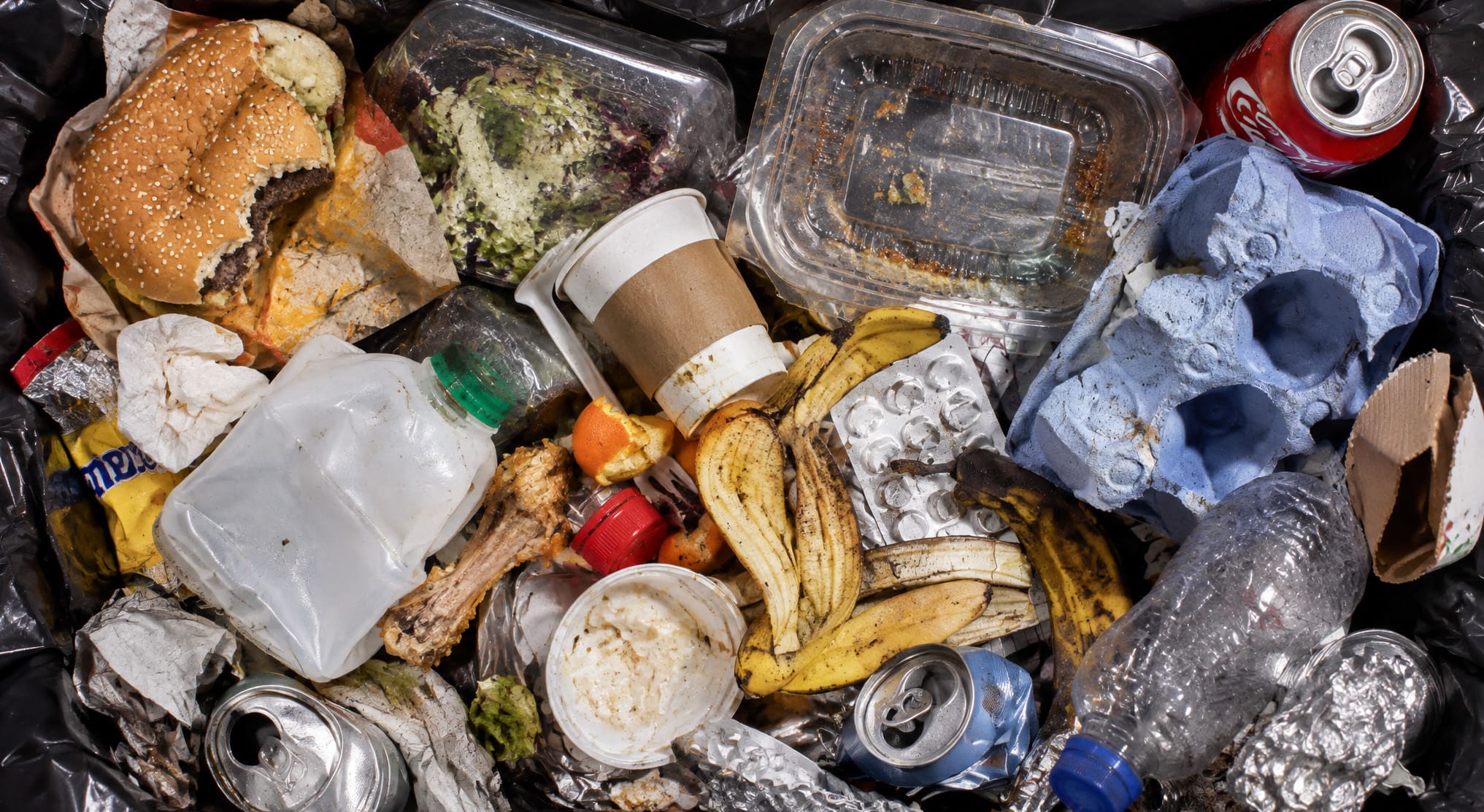
These contaminants can cause problems at various stages of the process. Foreign objects may interfere with feeding and material conveyance; meanwhile, unsuitable feedstock may introduce impurities into the solid residue or cause complications in subsequent waste management. Depending on the degree of contamination and process conditions, additional sorting and testing are often required before the raw material is fed into biochar production equipment to ensure it meets production requirements.
This issue becomes particularly critical when the final product is intended for agricultural use. Biochar must be assessed for relevant contaminants and other quality parameters, which may include heavy metals, potentially harmful organic compounds, salinity and pH. Thermal treatment does not guarantee that all contaminants will be destroyed or removed; some inorganic components may remain in the solid residue, and their concentration may increase as organic matter is lost.
As organic matter decomposes, the proportion of ash in the residual solids may increase relative to their original mass. This affects the composition of the final product and may reduce the proportion of organic carbon per unit mass, depending on the characteristics of the feedstock and the final biochar.
A high mineral content may also affect the product's suitability for specific applications. For agricultural uses, parameters such as electrical conductivity, pH and salt concentration may be important, as they influence soil conditions and plant growth. The impact depends on the actual composition and intended use, rather than solely on the ash content.
Mineral-rich feedstocks may also present operational challenges in certain circumstances, such as sedimentation or difficulties in handling.
Whilst food waste pyrolysis projects may be technically feasible, they are not necessarily suitable for specific carbon removal pathways.
For biochar-based carbon removal projects, the key issue is not how much biochar is produced, but how much bio-based carbon it contains, and what proportion of this carbon can be permanently sequestered over the intended timeframe. These characteristics must be determined through appropriate testing and in accordance with relevant methodologies. A high yield of biochar alone does not prove that a high level of permanent carbon removal has been achieved.
Food waste typically has a high moisture content, so the drying process may require additional energy. Furthermore, greenhouse gas emissions may also arise from stages such as waste sorting, pre-treatment, transport, pyrolysis, gas purification and the subsequent processing of biochar. If these emissions are significant, they will offset part of the carbon removal effect, thereby reducing the net carbon removal.
Assessments should also take into account the fate of food waste under a "counterfactual scenario" (i.e. what would have happened to this waste had it not been processed in this way). For example, the climate impact of processing waste that would generate methane under anaerobic conditions may differ from that of processing waste that is already managed through an effective waste management system. Baselines must be established in accordance with the relevant methodological guidelines; it cannot be directly assumed that the process will necessarily yield carbon removal benefits.
Demonstrating compliance for biochar produced from mixed food waste is often particularly challenging, as the composition and origin of raw materials may vary between batches. Furthermore, contaminants can affect product quality and may render the resulting biochar unsuitable for specific applications.
Consequently, project developers must verify that the specific feedstocks and production pathways they employ comply with the requirements of the selected methodology. Technical feasibility alone does not guarantee that the biochar produced will qualify for recognised carbon removal credits.
If the manner in which biochar is utilised does not comply with the provisions regarding sequestration or end-use set out in the selected methodology, then even if the material contains a measurable carbon content, its production process may not be recognised as "permanent carbon removal". Consequently, food waste cannot be regarded as a suitable feedstock for carbon removal simply because it can technically be converted into biochar through pyrolysis.
For industrial projects, the crux of the matter is not that food waste cannot be pyrolysed, but rather that converting it into biochar of consistent quality, which is usable and meets specific standards, often requires more complex preparation and process control than is necessary for certain conventional biomass feedstocks. If the objective is to achieve reliable biochar production, selecting biomass residues with a relatively uniform composition and well-defined properties may be a more practical starting point. When considering the use of food waste, its suitability should be determined through feedstock testing, process evaluation and product quality assessment, whilst clearly defining its intended end-use, before any investment decisions are made.
Compared with woody biomass and other agricultural wastes with relatively uniform properties, mixed food waste often presents greater challenges in terms of moisture management, feedstock consistency, contaminant control and product quality. These factors not only increase the need for pre-treatment, thereby complicating biochar production, but also limit the potential uses of the final solid product. For projects aimed at achieving "carbon removal" through biochar, additional requirements must also be considered, such as carbon stability, life-cycle emissions and compliance with certification standards.
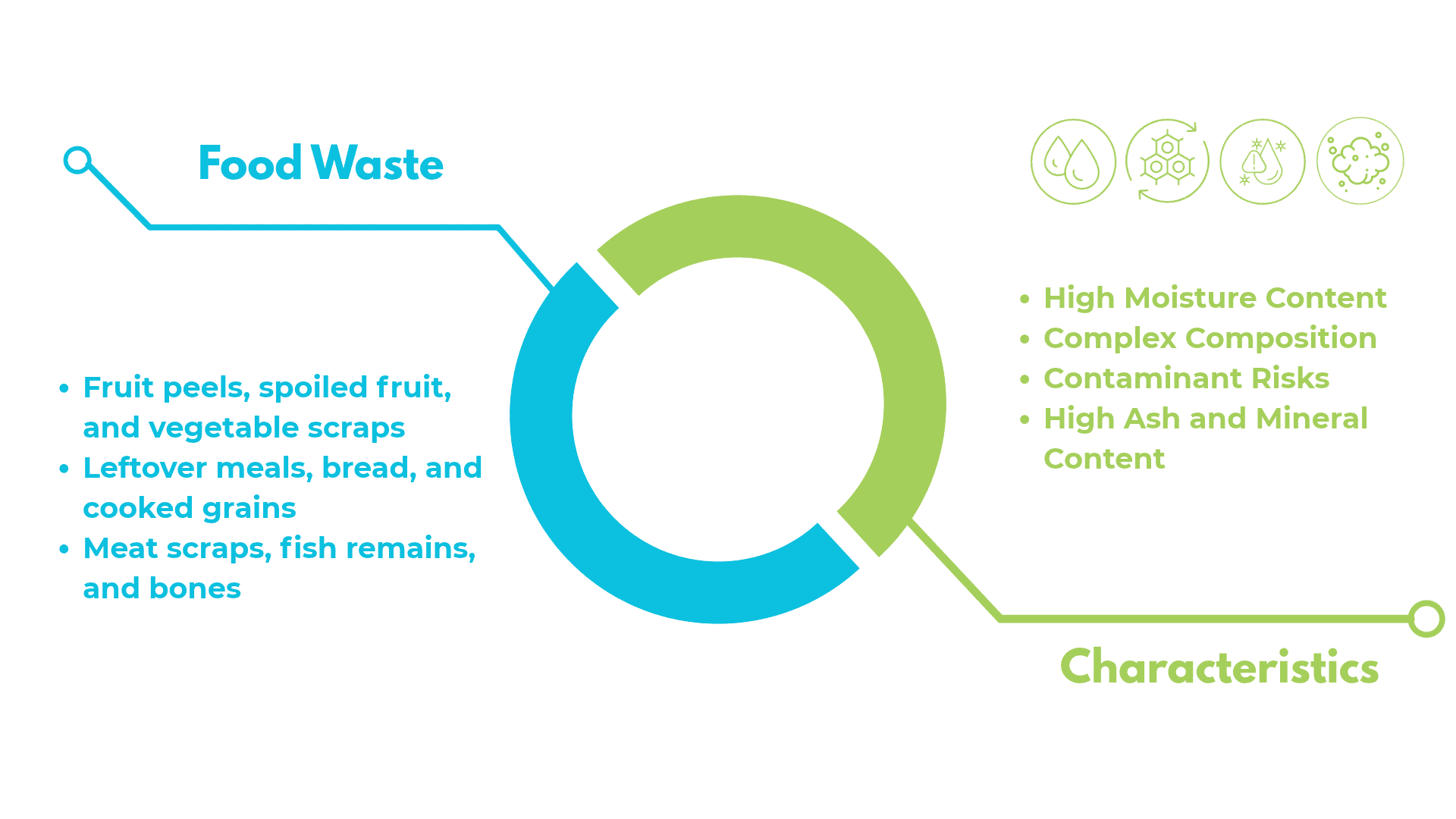
High Moisture Content
One of the main challenges facing the pyrolysis of food waste lies in its high and highly variable moisture content. Fresh fruit and vegetable waste, leftover food, and mixed food waste often contain significant amounts of moisture; this means that a large proportion of the energy input during processing is consumed by heating and evaporating this moisture, rather than being used to drive the pyrolysis reaction. In many industrial pyrolysis systems, effective processing of wet food waste often requires prior dewatering or drying. This not only increases capital expenditure but also raises operating costs and overall energy consumption.Although the use of waste heat recovery technology may reduce the energy consumption required for drying, its effectiveness depends on the available heat, the initial moisture content, the drying system itself, and the energy balance of the entire plant. Consequently, even if a particular feedstock is technically "feasible", its economic viability is often poor if extensive dewatering and drying are required.
This is particularly important when comparing food waste with biomass. Although biomass feedstocks sometimes also require drying, their moisture content can usually be effectively controlled through proper storage and pre-treatment measures. In contrast, the moisture content of mixed food waste fluctuates considerably, and it is prone to spoilage during storage, which makes feedstock pre-treatment more complex.
Complex Composition
Unlike biomass, which has a relatively uniform composition, food waste is a complex mixture whose composition varies significantly depending on its source. A typical mixed food waste stream may contain vegetables, cooked food, meat, fish, fats and oils, sauces, bones and other organic matter, with each component possessing distinct physical and chemical properties.These variations affect the behaviour of the material during heating and decomposition. Fluctuations in moisture content, organic composition, ash content and mineral concentration all influence heat transfer, gas yield, the generation of condensable vapour, and the properties of the final product (biochar). If there are significant differences in the characteristics of different batches of feedstock, maintaining stable operating conditions and product quality becomes considerably more difficult.
Consequently, this requires more extensive sampling, sorting, blending, process monitoring and adjustment of operating parameters, all of which undoubtedly increase the complexity of the project. For biochar producers, product consistency is paramount, as the final product must meet established quality standards. If the composition of the feedstock fluctuates significantly, it will be difficult to ensure that product characteristics remain within the expected range without additional pre-treatment and quality control measures.
Contaminant Risks
Food waste collected from households, restaurants and commercial kitchens may contain impurities in addition to organic matter. During collection and transport, plastic packaging, metal fragments, glass, detergent residues and other unintended substances may enter the waste stream.These contaminants can cause problems at various stages of the process. Foreign objects may interfere with feeding and material conveyance; meanwhile, unsuitable feedstock may introduce impurities into the solid residue or cause complications in subsequent waste management. Depending on the degree of contamination and process conditions, additional sorting and testing are often required before the raw material is fed into biochar production equipment to ensure it meets production requirements.
This issue becomes particularly critical when the final product is intended for agricultural use. Biochar must be assessed for relevant contaminants and other quality parameters, which may include heavy metals, potentially harmful organic compounds, salinity and pH. Thermal treatment does not guarantee that all contaminants will be destroyed or removed; some inorganic components may remain in the solid residue, and their concentration may increase as organic matter is lost.
High Ash and Mineral Content
Food waste may contain minerals and inorganic components derived from its constituents, processing methods and contamination. Depending on the feedstock, these components may include salts and other mineral compounds, which remain in the solid residue during the pyrolysis process.As organic matter decomposes, the proportion of ash in the residual solids may increase relative to their original mass. This affects the composition of the final product and may reduce the proportion of organic carbon per unit mass, depending on the characteristics of the feedstock and the final biochar.
A high mineral content may also affect the product's suitability for specific applications. For agricultural uses, parameters such as electrical conductivity, pH and salt concentration may be important, as they influence soil conditions and plant growth. The impact depends on the actual composition and intended use, rather than solely on the ash content.
Mineral-rich feedstocks may also present operational challenges in certain circumstances, such as sedimentation or difficulties in handling.
Food Waste-Derived Biochar is not Automatically Suitable for Carbon Removal
Whilst food waste pyrolysis projects may be technically feasible, they are not necessarily suitable for specific carbon removal pathways.Carbon Content and Stability for Permanent Sequestration
The composition of food waste varies greatly, which affects the carbon content and properties of the resulting biochar. Different feedstocks and pyrolysis conditions yield biochar with varying carbon concentrations and stability.For biochar-based carbon removal projects, the key issue is not how much biochar is produced, but how much bio-based carbon it contains, and what proportion of this carbon can be permanently sequestered over the intended timeframe. These characteristics must be determined through appropriate testing and in accordance with relevant methodologies. A high yield of biochar alone does not prove that a high level of permanent carbon removal has been achieved.
Production Emissions in Net Carbon Removal
The climate benefits of a biochar project depend on its "net carbon balance", rather than solely on the amount of carbon contained in the final product.Food waste typically has a high moisture content, so the drying process may require additional energy. Furthermore, greenhouse gas emissions may also arise from stages such as waste sorting, pre-treatment, transport, pyrolysis, gas purification and the subsequent processing of biochar. If these emissions are significant, they will offset part of the carbon removal effect, thereby reducing the net carbon removal.
Assessments should also take into account the fate of food waste under a "counterfactual scenario" (i.e. what would have happened to this waste had it not been processed in this way). For example, the climate impact of processing waste that would generate methane under anaerobic conditions may differ from that of processing waste that is already managed through an effective waste management system. Baselines must be established in accordance with the relevant methodological guidelines; it cannot be directly assumed that the process will necessarily yield carbon removal benefits.
Challenges Regarding Feedstock Compliance and Traceability
Not all sources of organic waste automatically meet the requirements of various biochar carbon removal methodologies. Relevant requirements may cover feedstock origin, sustainability, contaminant levels, production conditions, biochar quality, end-use, and proof of long-term sequestration.Demonstrating compliance for biochar produced from mixed food waste is often particularly challenging, as the composition and origin of raw materials may vary between batches. Furthermore, contaminants can affect product quality and may render the resulting biochar unsuitable for specific applications.
Consequently, project developers must verify that the specific feedstocks and production pathways they employ comply with the requirements of the selected methodology. Technical feasibility alone does not guarantee that the biochar produced will qualify for recognised carbon removal credits.
The Importance of Biochar End Use
Biochar produced from food waste may be technically feasible in certain applications but may not be suitable for others. For example, if used in agriculture, the product must comply with relevant quality and safety standards. For other applications, it is also necessary to assess whether long-term carbon sequestration can be achieved within the timeframe required by the relevant carbon removal framework.If the manner in which biochar is utilised does not comply with the provisions regarding sequestration or end-use set out in the selected methodology, then even if the material contains a measurable carbon content, its production process may not be recognised as "permanent carbon removal". Consequently, food waste cannot be regarded as a suitable feedstock for carbon removal simply because it can technically be converted into biochar through pyrolysis.
For industrial projects, the crux of the matter is not that food waste cannot be pyrolysed, but rather that converting it into biochar of consistent quality, which is usable and meets specific standards, often requires more complex preparation and process control than is necessary for certain conventional biomass feedstocks. If the objective is to achieve reliable biochar production, selecting biomass residues with a relatively uniform composition and well-defined properties may be a more practical starting point. When considering the use of food waste, its suitability should be determined through feedstock testing, process evaluation and product quality assessment, whilst clearly defining its intended end-use, before any investment decisions are made.
Prev Article:
2026-10-09
Next Article:
.jpg)