
How Biomass Power Generation Can Support AI Data Centers?
Artificial intelligence is reshaping the global digital infrastructure landscape. The rapid development of generative AI, large language models, cloud computing and high-performance computing is driving demand for increasingly powerful data centers. As the scale and computational density of these facilities continue to expand, electricity is becoming one of the most significant factors influencing their development.
However, AI workloads require substantial computational resources, whilst the deployment of high-density GPU servers further increases the power requirements of individual data centers. At the same time, the pace of electricity infrastructure development in many regions is struggling to keep up with the pace of investment in digital infrastructure. Grid connection queues, transmission constraints, transformer shortages and lengthy infrastructure construction cycles all present new challenges for data centre developers.
Consequently, data centre developers and operators are no longer relying solely on the public grid for power supply, but are increasingly evaluating on-site power generation, distributed energy and integrated energy systems.
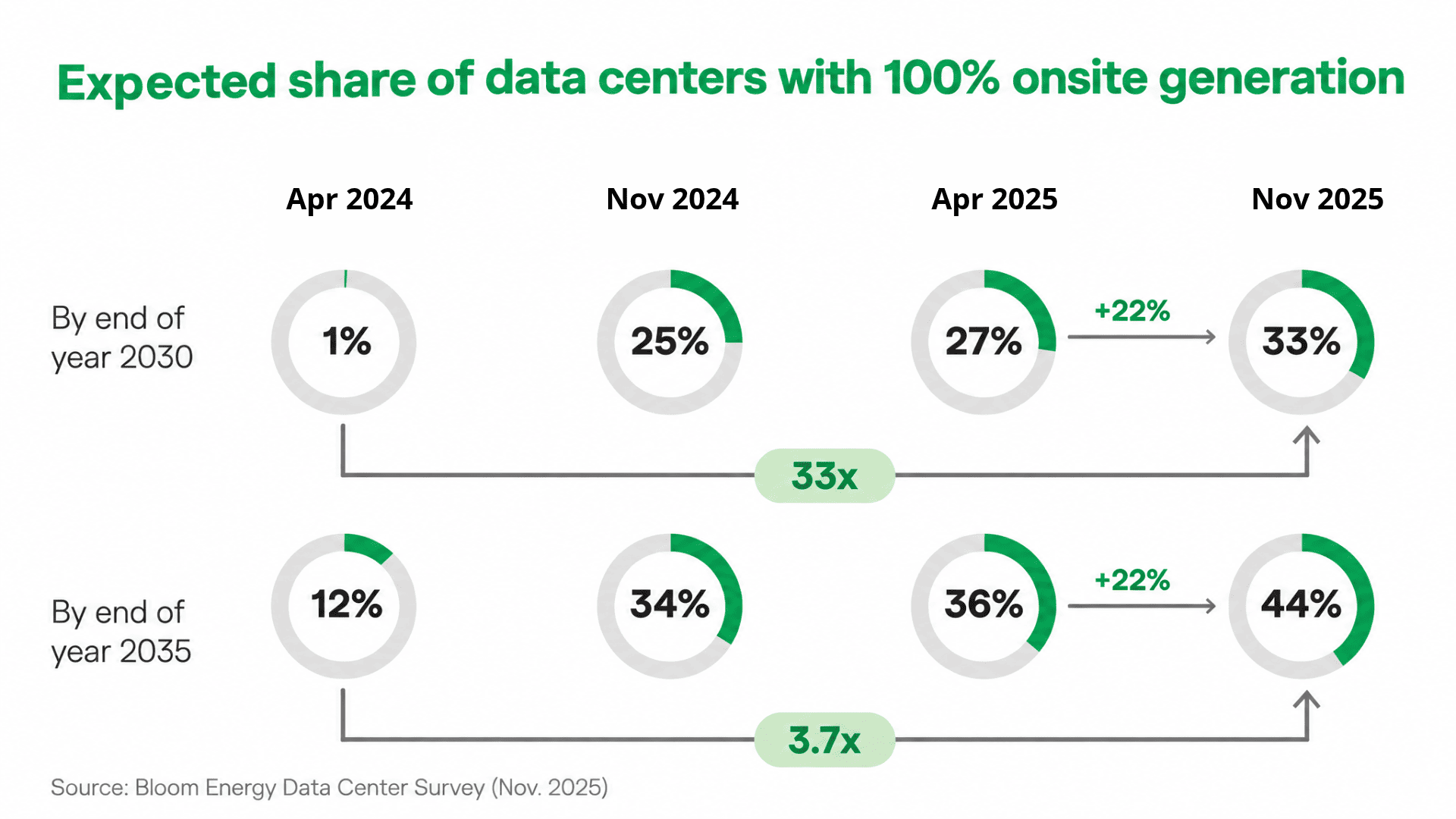
Among the many technologies under consideration, biomass power generation offers new opportunities to combine electricity production with locally available agricultural and forestry resources. In particular, biomass pyrolysis technology holds promise for combining power generation with biochar production, thereby introducing a new dimension to the energy and carbon management strategies of data centre projects.
The International Energy Agency's (IEA) report *Energy and Artificial Intelligence* highlights that grid connection constraints are a potential barrier to data centre expansion. The report's analysis estimates that, unless these challenges are addressed, approximately 20 per cent of planned data centre projects may be delayed due to grid connection constraints. For data centre developers, this presents a practical challenge. Projects may have already secured land, financing and building permits, yet their commercial operational timeline may still depend on the availability of sufficient power supply. If grid upgrades or grid connection approvals take longer than anticipated, facilities may be unable to commence operations as originally planned. In a market characterised by rapidly growing demand for AI computing power, delays in electricity supply could impact the competitive position and financial performance of the entire project.
Equipment procurement further adds to the complexity of the process. Transformers, switchgear, high-voltage cables and other critical electrical components are essential for connecting large facilities to the grid, but their production and delivery lead times can be lengthy. Furthermore, new infrastructure projects may require environmental assessments, land-use approvals and coordination across multiple regulatory bodies. These factors all serve to extend project timelines and introduce uncertainty into energy planning.
Natural gas is currently one of the most mature solutions for large-scale on-site power generation. Gas engines and gas turbines can be used to supply power to industrial facilities and large energy consumers, with certain systems also supporting combined heat and power (CHP) applications. Their proven engineering solutions, relatively high power density and ability to provide dispatchable power make them an ideal choice for data centre energy planning, particularly in regions with well-developed natural gas infrastructure.
Their main limitation is the fluctuating nature of their output. Solar power generation varies over time and with the seasons, whilst wind power depends on local weather conditions. To ensure a stable power supply, ancillary measures such as energy storage, grid integration, demand-side management and dispatchable generation may be required. For large data centres, land availability and the local renewable resource profile may also influence the feasibility of developing sufficient generation capacity.
For data centre applications, this characteristic of biomass enables it to provide dispatchable power, provided the system is well-designed and there is an adequate fuel supply. Biomass projects also offer opportunities to utilise local agricultural and forestry residues, integrate industrial thermal applications, and produce biochar as an additional by-product under suitable pyrolysis configurations. These characteristics make biomass worthy of consideration as part of a diversified energy strategy, particularly in regions with well-developed agricultural or forestry sectors.
For data centres, this characteristic may be crucial when evaluating energy sources capable of providing electricity outside the periods when variable renewable energy is available. If biomass power stations can properly manage feedstock supply, plant performance and maintenance schedules, they have the potential to operate for extended periods. Consequently, biomass power stations are worth considering for facilities seeking to diversify their electricity supply by adding dispatchable generation resources.
For regions with well-established agricultural processing and forestry industries, locally available residues may present opportunities for decentralised energy projects. Constructing biomass energy facilities near resource-rich areas can both reduce reliance on long-distance fuel transport and create additional value from materials that would otherwise have limited economic use.
For data centre operators, this presents an opportunity to explore broader climate strategies that take into account not only the immediate electricity supply but also long-term carbon removal.
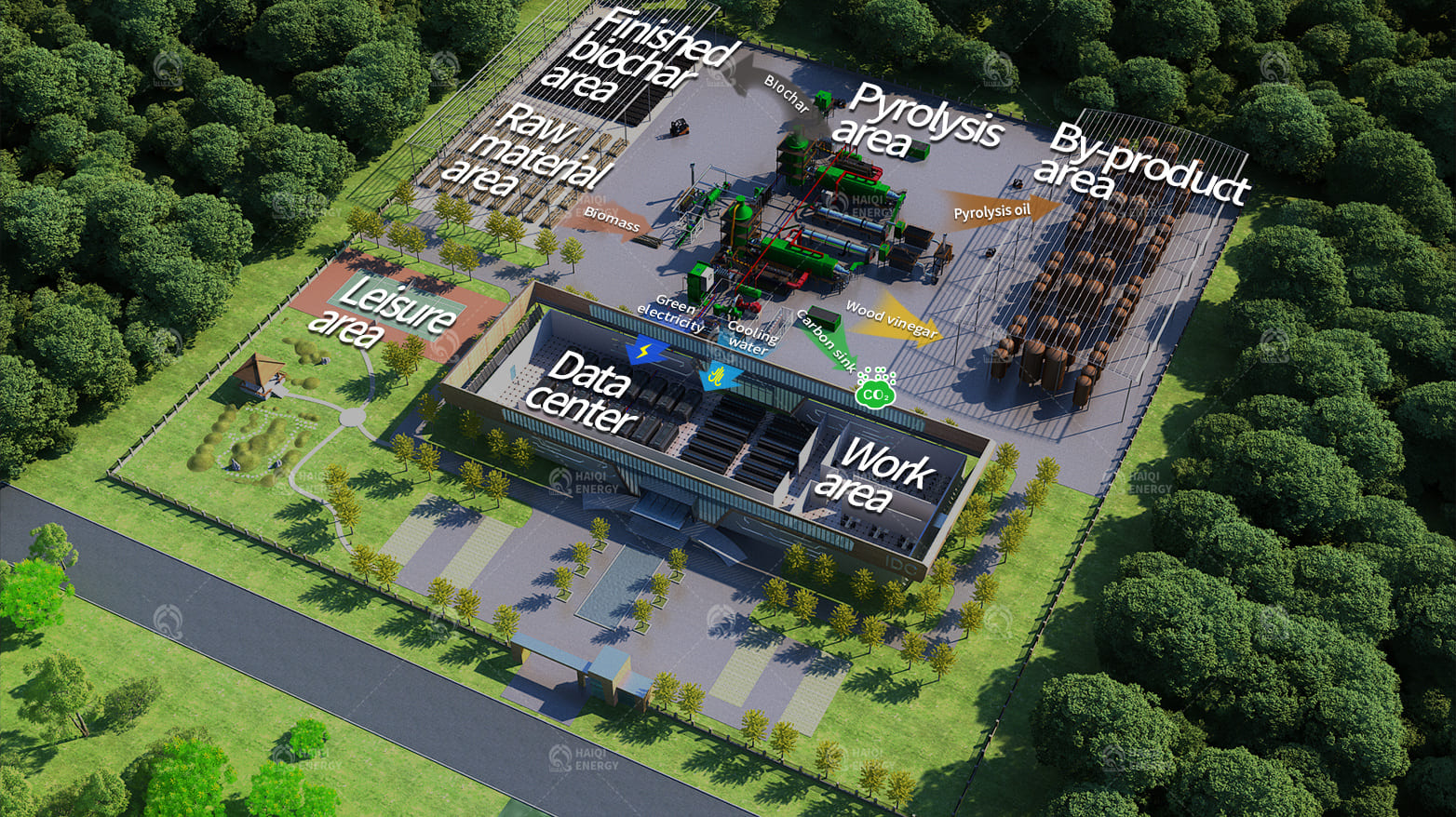
Grid-connected biomass power generation systems can provide additional generation capacity, reducing the volume of electricity purchased from the grid under the right conditions, whilst creating opportunities to utilise local biomass resources. The grid can also provide supplementary power when the biomass power plant is undergoing maintenance or when its output is insufficient to meet the facility's requirements. For large data centres, this configuration may be more practical than relying entirely on a single on-site power generation technology. As biomass power generation facilities form part of a broader electricity supply strategy, their contribution depends on available fuel resources, generation capacity and the operational requirements of the data centre.
For developers evaluating next-generation AI data centres, the key question is no longer simply where to source electricity, but how to ensure a reliable, economically viable and environmentally responsible energy supply in the long term. With the right conversion technologies, biomass can provide dispatchable electricity and potentially usable thermal energy. Pyrolysis-based systems can also produce biochar, thereby creating further opportunities to combine energy infrastructure with permanent carbon removal.
At HaiQi, we believe that biomass energy is a component with immense potential within the evolving energy landscape. We are committed to linking biomass resource utilisation, power generation and biochar production through biomass pyrolysis and integrated energy solutions, thereby supporting the development of more diversified energy systems for industrial and data centre applications.
However, AI workloads require substantial computational resources, whilst the deployment of high-density GPU servers further increases the power requirements of individual data centers. At the same time, the pace of electricity infrastructure development in many regions is struggling to keep up with the pace of investment in digital infrastructure. Grid connection queues, transmission constraints, transformer shortages and lengthy infrastructure construction cycles all present new challenges for data centre developers.
Consequently, data centre developers and operators are no longer relying solely on the public grid for power supply, but are increasingly evaluating on-site power generation, distributed energy and integrated energy systems.
Among the many technologies under consideration, biomass power generation offers new opportunities to combine electricity production with locally available agricultural and forestry resources. In particular, biomass pyrolysis technology holds promise for combining power generation with biochar production, thereby introducing a new dimension to the energy and carbon management strategies of data centre projects.
Why Grid Constraints Are Becoming a Challenge for Data Centre Development?
Electricity Infrastructure Struggles to Meet Demand
The public grid remains the primary source of electricity for most data centres, providing access to interconnected generation resources and established transmission networks. However, expanding these systems is a complex process requiring engineering studies, land acquisition, regulatory approvals, equipment procurement and construction. New transmission lines and substations may not be completed in time for data centre development, particularly in regions where electricity infrastructure is already operating close to full capacity.The International Energy Agency's (IEA) report *Energy and Artificial Intelligence* highlights that grid connection constraints are a potential barrier to data centre expansion. The report's analysis estimates that, unless these challenges are addressed, approximately 20 per cent of planned data centre projects may be delayed due to grid connection constraints. For data centre developers, this presents a practical challenge. Projects may have already secured land, financing and building permits, yet their commercial operational timeline may still depend on the availability of sufficient power supply. If grid upgrades or grid connection approvals take longer than anticipated, facilities may be unable to commence operations as originally planned. In a market characterised by rapidly growing demand for AI computing power, delays in electricity supply could impact the competitive position and financial performance of the entire project.
Grid Connection Queues and Regional Power Constraints
The challenges facing grid connection are not limited to electricity supply. When large new users seek access to existing grids, transmission capacity, substations, transformers and distribution infrastructure can all become limiting factors. Even in regions with sufficient overall power supply, local infrastructure may be unable to provide the required power for a specific data centre without large-scale upgrades.Equipment procurement further adds to the complexity of the process. Transformers, switchgear, high-voltage cables and other critical electrical components are essential for connecting large facilities to the grid, but their production and delivery lead times can be lengthy. Furthermore, new infrastructure projects may require environmental assessments, land-use approvals and coordination across multiple regulatory bodies. These factors all serve to extend project timelines and introduce uncertainty into energy planning.
Energy Availability Is Becoming A Key Factor in Data Centre Site Selection
Historically, data centre site selection has been primarily influenced by factors such as fibre-optic connectivity, land availability and infrastructure. Today, the importance of the electricity supply is becoming increasingly apparent. Developers must not only assess whether a site has access to the grid, but also evaluate whether sufficient power capacity can be secured within the project's timeframe at an economically viable cost.
This may encourage investment in regions with available power generation capacity, established industrial infrastructure or reliable local energy resources. For example, sites located near agricultural processing facilities or forestry operations may present opportunities to explore biomass energy projects, provided that a sufficient supply of raw materials can be secured and the necessary infrastructure developed. Such opportunities are particularly significant in regions where biomass resources are geographically concentrated and traditional electricity infrastructure capacity is limited.
What is On-Site Power Generation?
On-site power generation refers to electricity produced at or near the point of consumption. In the data centre sector, this typically involves installing dedicated power generation equipment within the data centre or in the immediate vicinity to meet some or all of its operational electricity requirements. Depending on the project design, on-site power generation can be integrated into the public grid to meet the electricity needs of specific sections of the data centre, or form part of a more independent energy system.
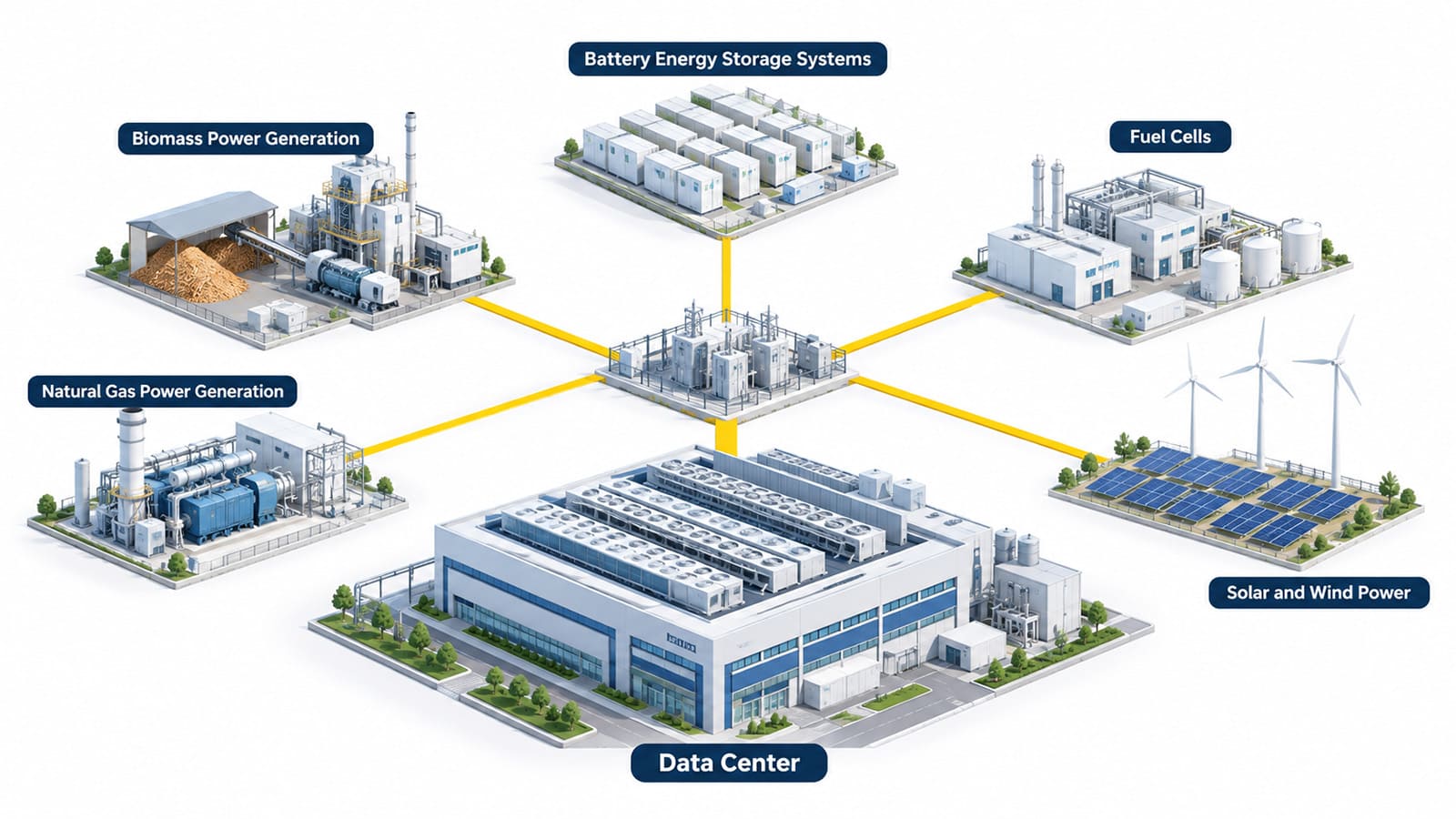
A common approach is grid-connected generation, whereby the data centre maintains a connection to the public grid whilst utilising on-site generation to supplement its power supply. Another approach is off-grid generation, whereby electricity is generated on the consumer side (behind the meter) and consumed directly by the facility, subject to compliance with relevant regulations and grid connection requirements. More complex projects may combine multiple generation technologies with energy storage and intelligent energy management systems to create a hybrid power architecture.
Comparison of Different On-Site Power Generation Technologies
Natural Gas Power Generation
Natural gas is currently one of the most mature solutions for large-scale on-site power generation. Gas engines and gas turbines can be used to supply power to industrial facilities and large energy consumers, with certain systems also supporting combined heat and power (CHP) applications. Their proven engineering solutions, relatively high power density and ability to provide dispatchable power make them an ideal choice for data centre energy planning, particularly in regions with well-developed natural gas infrastructure.Solar and Wind Power
Solar photovoltaic (PV) and wind power are important sources of renewable electricity that can support data centres’ decarbonisation strategies. They can be deployed through on-site installations or off-site power purchase agreements, enabling operators to access renewable electricity without having to build their own generation facilities. Their main advantages lie in the fact that they do not require the ongoing purchase of conventional fuels to generate electricity, and once the facilities are built, their operational emissions are typically very low.Their main limitation is the fluctuating nature of their output. Solar power generation varies over time and with the seasons, whilst wind power depends on local weather conditions. To ensure a stable power supply, ancillary measures such as energy storage, grid integration, demand-side management and dispatchable generation may be required. For large data centres, land availability and the local renewable resource profile may also influence the feasibility of developing sufficient generation capacity.
Fuel Cells
Fuel cells generate electricity through electrochemical reactions rather than conventional combustion. Depending on the technology and fuel used, they can provide a relatively continuous power supply and offer high generation efficiency. Their modular design also makes them suitable for distributed generation and certain data centre applications.Battery Energy Storage Systems
Battery energy storage systems are increasingly becoming an integral part of modern data centre energy infrastructure. Unlike power generation technologies, batteries do not produce primary energy themselves; they store electricity sourced from elsewhere and release it when required. Their applications include short-term backup power, peak demand management, renewable energy grid integration, and addressing temporary fluctuations in electricity supply and demand.Biomass Power Generation
Biomass power generation converts organic matter into electrical energy through thermochemical or biochemical processes. Depending on the feedstock and technology, biomass can be utilised in direct combustion systems, gasification units or pyrolysis systems. Unlike solar and wind energy, biomass stores chemical energy within physical feedstock that can be harvested and stored before conversion. This means that power generation schedules can be planned according to fuel availability, generation capacity and operational requirements.For data centre applications, this characteristic of biomass enables it to provide dispatchable power, provided the system is well-designed and there is an adequate fuel supply. Biomass projects also offer opportunities to utilise local agricultural and forestry residues, integrate industrial thermal applications, and produce biochar as an additional by-product under suitable pyrolysis configurations. These characteristics make biomass worthy of consideration as part of a diversified energy strategy, particularly in regions with well-developed agricultural or forestry sectors.
Why is Biomass Worthy of Attention in Data Centre Energy Strategies?
Biomass as a Dispatchable Renewable Energy Source
One of the most important characteristics of biomass is its ability to store energy in the form of physical feedstock. Agricultural residues, forestry residues and other suitable organic materials can be collected, processed and stored before being converted into electrical energy. Unlike solar and wind power generation, biomass power generation does not rely directly on the availability of sunlight or wind at the time of electricity consumption. Provided that the fuel supply is reliable, storage capacity is sufficient and the system is well-designed, biomass power generation can be scheduled according to established operational requirements.For data centres, this characteristic may be crucial when evaluating energy sources capable of providing electricity outside the periods when variable renewable energy is available. If biomass power stations can properly manage feedstock supply, plant performance and maintenance schedules, they have the potential to operate for extended periods. Consequently, biomass power stations are worth considering for facilities seeking to diversify their electricity supply by adding dispatchable generation resources.
Agricultural and Forestry Residues as Energy Sources
Agricultural and forestry activities generate large quantities of organic residues, which may be suitable for biomass energy applications. These residues include rice husks, wood chips, crop straw, sugarcane bagasse, bamboo residues, empty fruit bunches from oil palms and coconut shells. Depending on their physical and chemical properties, these materials can be processed using various biomass conversion technologies to produce thermal energy, combustible gas or electricity.For regions with well-established agricultural processing and forestry industries, locally available residues may present opportunities for decentralised energy projects. Constructing biomass energy facilities near resource-rich areas can both reduce reliance on long-distance fuel transport and create additional value from materials that would otherwise have limited economic use.
Synergies Between Energy and Carbon Removal
A distinctive feature of biomass power generation, setting it apart from many traditional power generation technologies, is its ability to produce biochar. Biochar is a carbon-rich solid material generated through the thermochemical conversion of biomass under oxygen-deprived conditions. When biochar meets the relevant quality requirements and is subjected to appropriate long-term storage or utilisation pathways, it contributes to permanent carbon removal. This adds a new dimension to the environmental and commercial assessment of biomass power generation projects.For data centre operators, this presents an opportunity to explore broader climate strategies that take into account not only the immediate electricity supply but also long-term carbon removal.
Integrating Biomass Energy with Data Centre Infrastructure
For many projects, integrating biomass power generation with the existing grid may be a practical starting point. In this configuration, the data centre remains connected to the public grid, whilst the biomass power plant meets a portion of its electricity demand. The power generation facility can operate in accordance with pre-agreed dispatch strategies, local electricity regulations and the data centre's technical requirements. This arrangement enables the data centre to diversify its electricity supply without having to disconnect entirely from the grid.Grid-connected biomass power generation systems can provide additional generation capacity, reducing the volume of electricity purchased from the grid under the right conditions, whilst creating opportunities to utilise local biomass resources. The grid can also provide supplementary power when the biomass power plant is undergoing maintenance or when its output is insufficient to meet the facility's requirements. For large data centres, this configuration may be more practical than relying entirely on a single on-site power generation technology. As biomass power generation facilities form part of a broader electricity supply strategy, their contribution depends on available fuel resources, generation capacity and the operational requirements of the data centre.
For developers evaluating next-generation AI data centres, the key question is no longer simply where to source electricity, but how to ensure a reliable, economically viable and environmentally responsible energy supply in the long term. With the right conversion technologies, biomass can provide dispatchable electricity and potentially usable thermal energy. Pyrolysis-based systems can also produce biochar, thereby creating further opportunities to combine energy infrastructure with permanent carbon removal.
At HaiQi, we believe that biomass energy is a component with immense potential within the evolving energy landscape. We are committed to linking biomass resource utilisation, power generation and biochar production through biomass pyrolysis and integrated energy solutions, thereby supporting the development of more diversified energy systems for industrial and data centre applications.
Next Article: